When Surgery Enters The Conversation
Treatment-resistant depression is usually defined as depression that has not responded to several adequate trials of antidepressant medication, and the chance that each further medication works falls with every attempt. Options such as transcranial magnetic stimulation, electroconvulsive therapy, ketamine, and vagus nerve stimulation come first. Deep brain stimulation is considered only after these, and only in coordination with psychiatry.
Obsessive-Compulsive Disorder
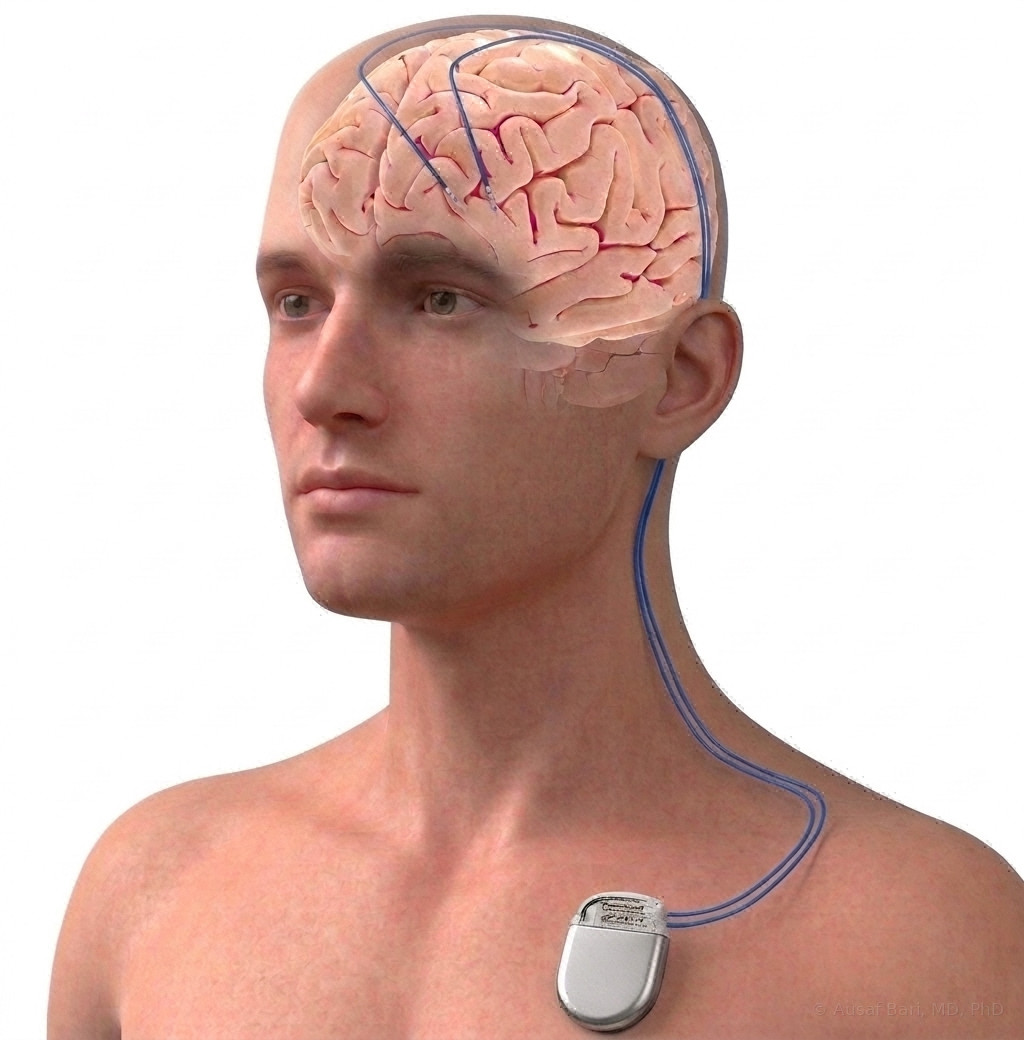
Deep brain stimulation for severe, treatment-resistant OCD has been available since 2009 under an FDA humanitarian device exemption. Electrodes are placed in the ventral capsule and ventral striatum, a circuit involved in obsessions and compulsions, and stimulation is adjusted over months with your psychiatrist. It is reserved for severe illness that has not responded to adequate trials of medication and behavioral therapy.
Depression
Deep brain stimulation for depression is investigational. The most studied target is the subcallosal cingulate, a hub in the brain’s mood network that is overactive in depression; stimulating the white matter beneath it has produced lasting remission in a meaningful share of people who had exhausted every other treatment, in studies going back to 2005. Across five earlier studies with the same device, 172 patients were followed for up to five years. DBS is not FDA approved for depression, so Dr. Bari offers it only through a clinical trial.
The TRANSCEND Trial: DBS For Depression
UCLA is one of up to 25 US sites in TRANSCEND, Abbott’s prospective, double-blind, randomized, sham-controlled study of DBS of the subcallosal cingulate white matter for treatment-resistant depression. About 100 patients will be implanted. After surgery, half receive active stimulation and half sham stimulation for twelve months; everyone then receives active stimulation, and follow-up continues for three years. Dr. Bari performs the implant and works with UCLA Psychiatry, which leads the psychiatric evaluation and manages care during the study.
You may qualify if you are 22 to 70, have non-psychotic unipolar major depressive disorder, have been in the current episode for at least a year or have had more than three episodes, and have not responded to at least four adequate antidepressant treatments. People with psychotic features, high current suicide risk, or another active neurostimulation treatment are not eligible. Participation is voluntary, involves regular study visits, and is discussed in full at screening. See all open clinical trials.
DBS For Addiction: Experimental, Not Yet A Treatment
Addiction is a brain-circuit disorder. The same reward network that drives motivation and craving, the nucleus accumbens, orbitofrontal cortex, anterior cingulate, amygdala, and hippocampus, becomes captured by the drug. Relapse rates with the best current treatments remain around 70 percent, and for nicotine, the most common addiction in the United States, quitting is notoriously hard. Neurosurgeons have explored this circuit for decades, first with lesions and more recently with deep brain stimulation of the nucleus accumbens and related targets for alcohol, cocaine, methamphetamine, opioid, and nicotine addiction, with encouraging results in small studies.
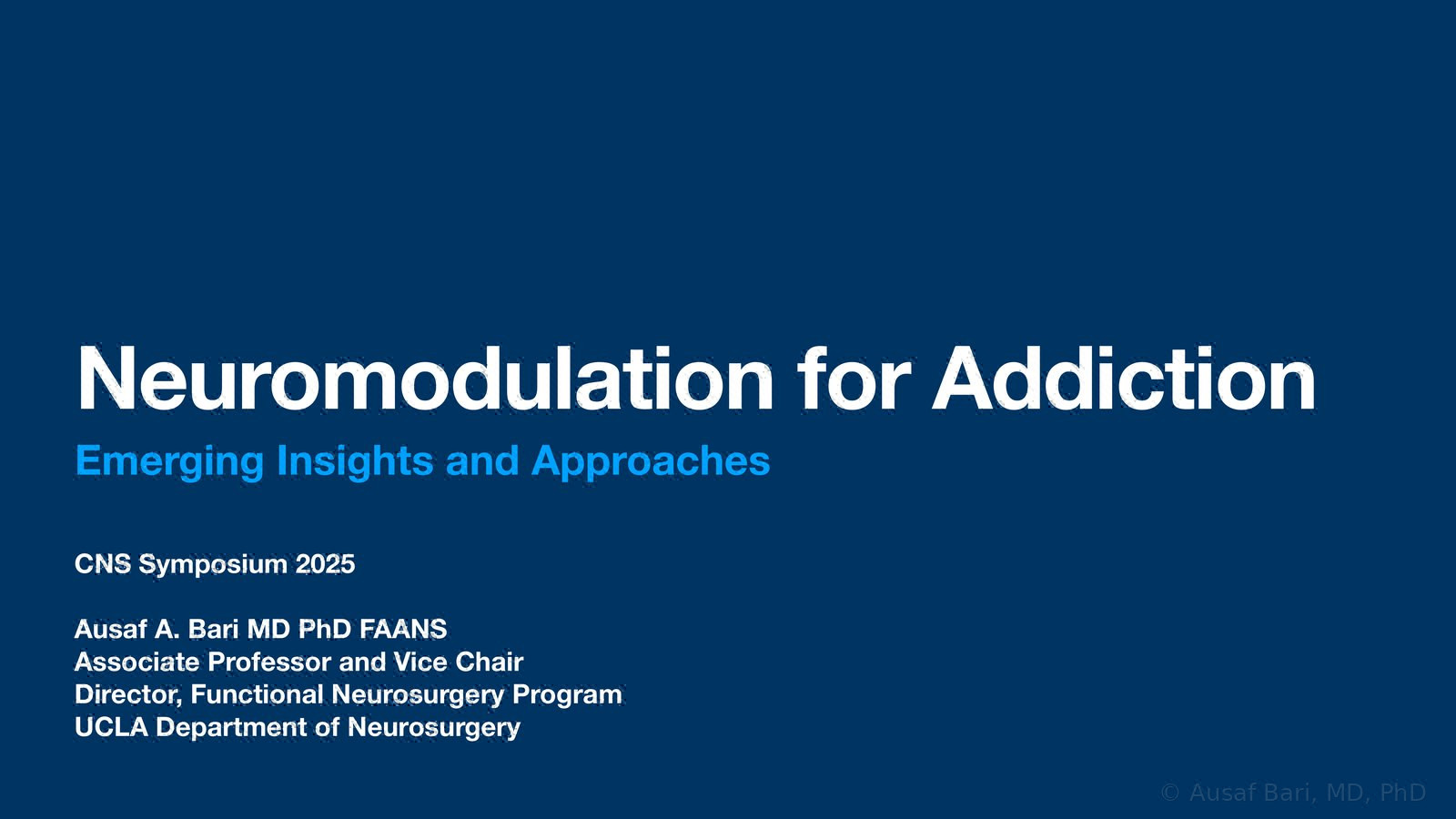
Dr. Bari’s position is direct: DBS for addiction is experimental. It is not FDA approved, it is not offered as a clinical treatment, and the science is not yet good enough to know whom it would help or where to stimulate. His laboratory is working on that science. Using recordings from electrodes already implanted for epilepsy and pain, his team has found that craving and pleasure have distinct electrical signatures in the orbitofrontal cortex and hippocampus, that opioids change the coupling between those regions, and that pleasure from nicotine is marked by rising theta rhythms in the hippocampus. Those signals are candidate biomarkers for a future closed-loop device that would act only when craving builds. Anyone interested in this work can be considered for research studies, not treatment; Dr. Bari will say so plainly at a consultation. His 2025 conference presentation on the topic is below.
Neuromodulation For Addiction: Emerging Insights And Approaches
Presented by Dr. Bari at the CNS Symposium 2025 · 18 slides
How The Evaluation Works
A psychiatrist with expertise in treatment-resistant illness confirms the diagnosis, the history of treatments, and the safety of proceeding. Neuropsychological testing and MRI follow. The decision is made by the team together, with you, and stimulation is managed jointly after surgery. Dr. Bari holds a joint appointment in Psychiatry and works within its programs.
Questions To Bring
- Have I had adequate trials of the standard treatments?
- Would I be a candidate for OCD DBS under the humanitarian exemption?
- Do I meet the TRANSCEND trial criteria, and what would participation involve?
- Who manages my psychiatric care after surgery?