Tremor Care · Los Angeles

Your Hands Can
Be Steady Again.

If tremor makes a cup of coffee, a signature, or a meal a struggle, and medication has not been enough, there are proven treatments that work in a single session. Ausaf Bari, MD, PhD, FAANS, FACS has treated tremor with MRI-guided focused ultrasound since 2014, longer than any other surgeon in Southern California, and performs deep brain stimulation and radiosurgery for the patients who need them instead.

  • Focused Ultrasound Since 2014
  • Most MRgFUS Experience In Southern California
  • Average Tremor Improvement About 80%
  • Over 500 DBS Implants
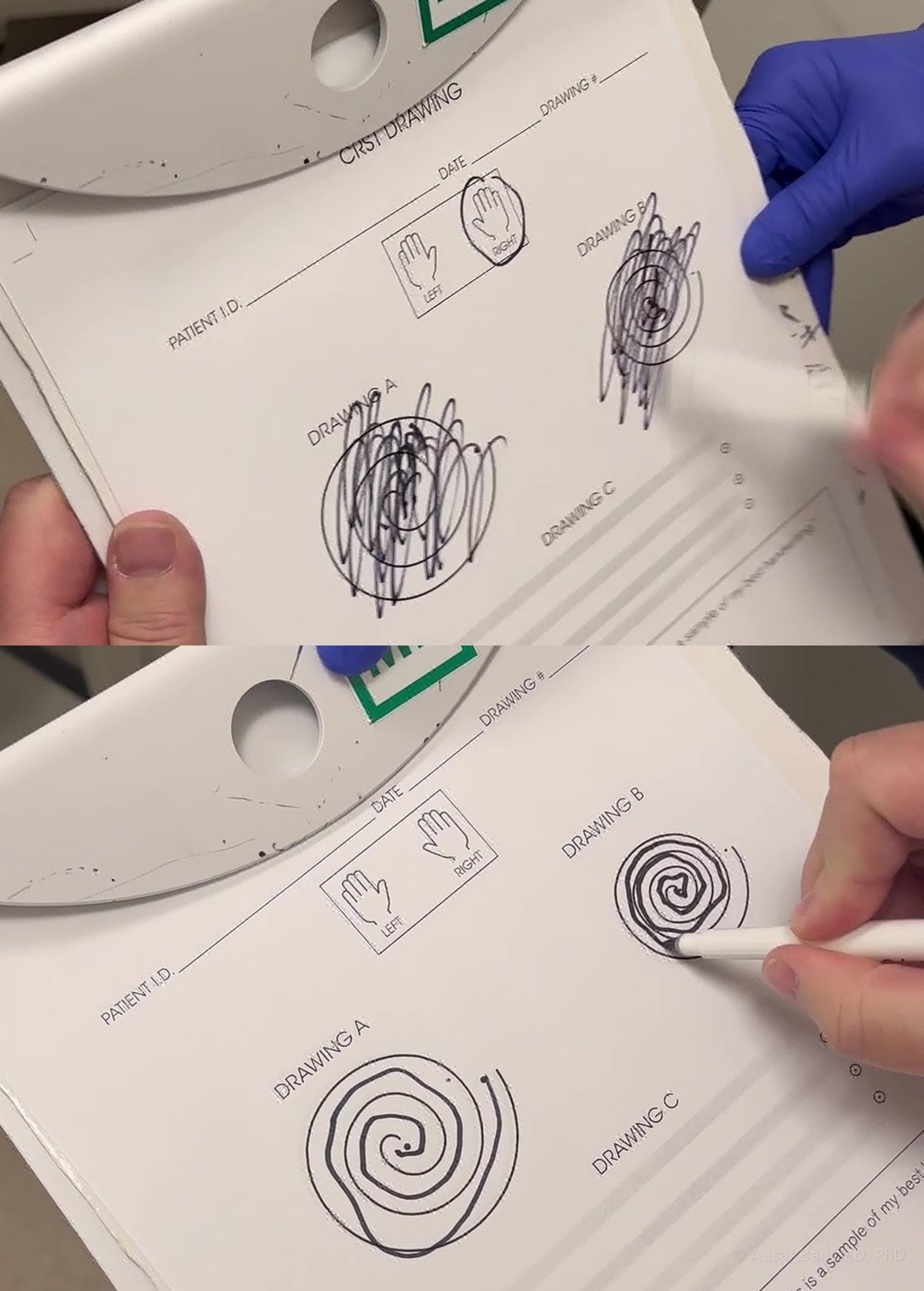
Spirals drawn by one of Dr. Bari’s patients with essential tremor: broken, shaky loops before treatment on top and smooth spirals after treatment below
Before (Top) And After (Bottom)Spirals drawn by one of Dr. Bari’s patients
Watch the videos below
01

Is It Essential Tremor?

Tremor is not one condition. The pattern of the shaking usually points to the cause, and the cause decides the treatment. Essential tremor is by far the most common: an action tremor that appears when the hands are in use and often runs in families. Parkinson’s tremor is different, present at rest and usually starting on one side. The table below is a guide, not a diagnosis. An in-person evaluation with a movement disorder specialist can help determine the underlying cause.

Essential tremorParkinson’s tremorDystonic tremorOther causes
When it shakesDuring activity: holding a cup, writing, eatingAt rest; often eases with movementWith certain postures; may improve with a touch to the face or chinVaries: stress, caffeine, thyroid, some medications
WhereBoth hands, sometimes head or voiceOften one side first, with stiffness or slownessNeck, hands, or one limb, often with twisting postureUsually both hands, fine and fast
Family historyCommonLess commonSometimesUncommon
Treatments Dr. Bari offersFocused ultrasound, DBS, radiosurgeryFocused ultrasound, DBSDBSUsually treated by addressing the cause
Tremor By The Numbers

The Most Common Movement Disorder,
And The Most Under-Treated.

Essential tremor affects far more Americans than Parkinson’s disease, yet most people who have it are never told a procedure could help. These figures come from published population studies.

7 millionAmericans are living with essential tremor
2.2%of Americans have essential tremorAbout one person in every 45, across all ages.
7×more common than Parkinson’s diseaseRoughly 7 million Americans with essential tremor versus about 1 million with Parkinson’s.
4.6%of people over 65Prevalence climbs with age. Among people over 95, about 1 in 5 has essential tremor.
1 in 3diagnosed with essential tremor have something elseIn a specialist review, 37 percent of “essential tremor” diagnoses were wrong; Parkinson’s disease and dystonia were the usual answers.
Fewer than 1 in 10 have had a procedure. In a community study of people with essential tremor, followed for up to seven years, only about 8 in 100 had ever had deep brain stimulation or focused ultrasound, even though both are covered by Medicare and both work in a single session or operation.
56 in 100 stop both first-line medicines. Among patients who tried propranolol or primidone, more than half discontinued both, usually because the benefit was partial or the side effects were not worth it. Stopping medication is usually where the conversation ends. It should be where the referral begins.

Sources: Louis and Ottman, Tremor and Other Hyperkinetic Movements, 2014 (US estimate 7.0 million, 2.2 percent); Louis and Ferreira, Movement Disorders, 2010 (worldwide prevalence 0.9 percent, 4.6 percent over 65, 21.7 percent over 95); Jain, Lo and Louis, Archives of Neurology, 2006 (37 percent misdiagnosed); Diaz and Louis, Parkinsonism and Related Disorders, 2010 (56 percent discontinued both propranolol and primidone); Berry, Guy, Sharma and Louis, Parkinsonism and Related Disorders, 2025 (community cohort: 4.6 percent had DBS, 3.5 percent focused ultrasound); Parkinson’s Foundation prevalence and incidence data.

From Dr. Bari’s Clinical Practice

See The Spiral-Drawing Task

Each patient draws a spiral and traces lines before treatment and again afterward. These clips come from Dr. Bari’s own clinic footage and play at their original speed, so what you see is the real change in the hand.

Patient One

Before treatment the tremor breaks up every loop of the spiral. Afterward the same hand draws the spiral and the lines steadily.

Patient Two

A second patient with essential tremor. The before clip shows the pen unable to hold the curve; the after clip shows the spiral and the straight lines drawn smoothly.

Two patient examples. The size of the response varies: most patients see more than 80 percent improvement, some closer to 50 percent, and in Dr. Bari’s hands the average across patients is about 80 percent.

02

When Is It Time To Consider A Procedure?

Medication comes first. Propranolol and primidone help some people, but many find the benefit partial or the side effects hard to live with, and tremor tends to worsen slowly over the years. The question is not how bad the shaking looks; it is what it costs you. If you have stopped eating out, avoid signing in public, need help with buttons or make-up, or your work depends on steady hands, it is reasonable to ask about a procedure now rather than waiting until the tremor is severe. Age itself is not a barrier; Dr. Bari treats patients in their eighties and nineties.

03

How Referrals Work

The path to any of these treatments starts with a movement disorders neurologist, either one of Dr. Bari’s UCLA colleagues or a specialist near you. That neurologist confirms the diagnosis, makes sure first-line medications have been given a fair trial, and, for Parkinson’s disease, confirms you are on the right doses and that surgery is the appropriate next step. Their referral starts the surgical evaluation. If you do not have a movement disorders neurologist, call and the team will arrange one; if you do, ask them to send their notes, your medication history, and any imaging along with the referral.

04

Your Three Options

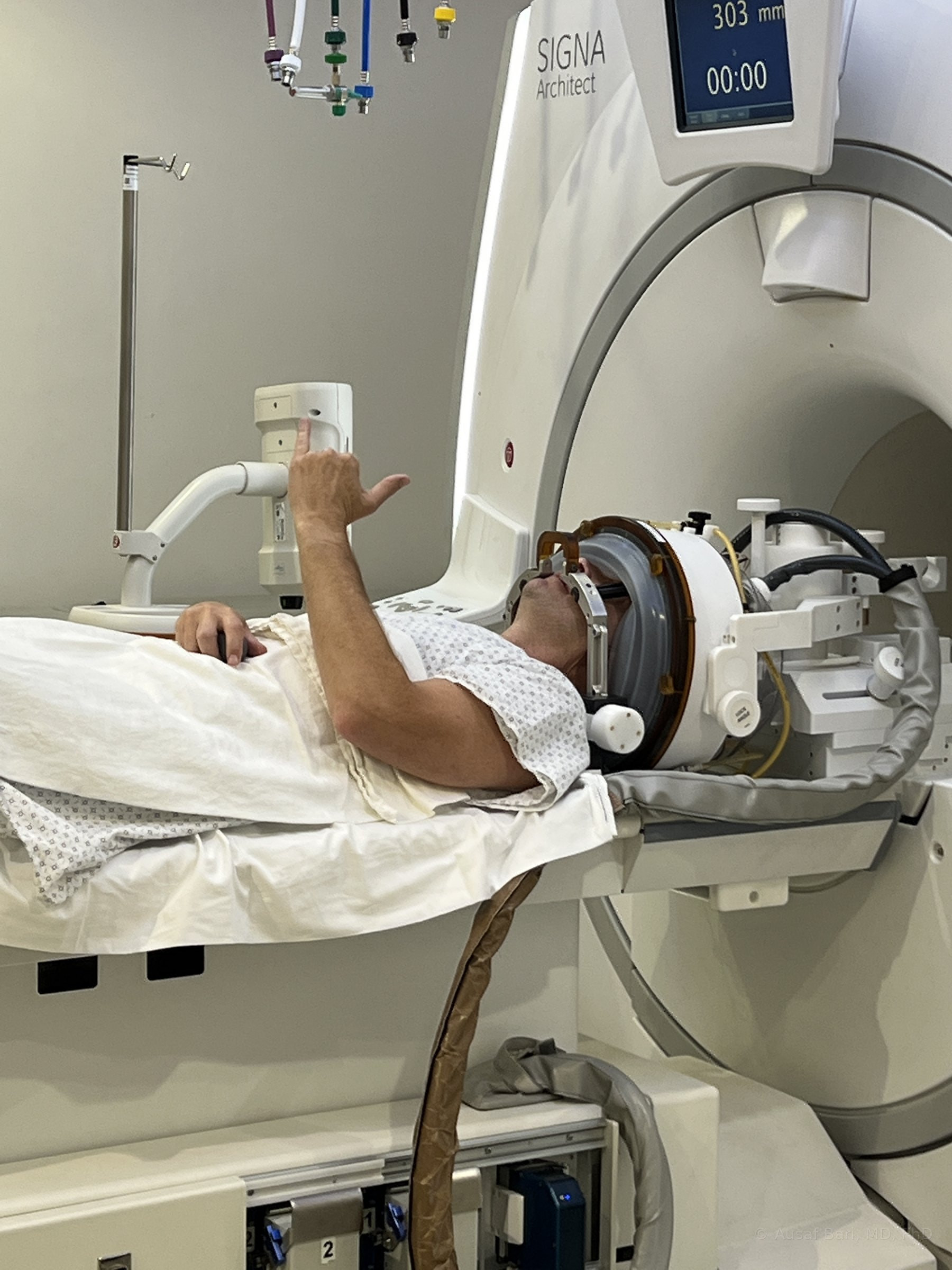
A patient lying on the MRI table with the focused ultrasound helmet fitted over his head, raising a hand during the treatment
In The Helmet: Awake And Able To Respond During Treatment

Focused ultrasound, deep brain stimulation, and radiosurgery all quiet the same small relay in the thalamus that carries tremor signals. They reach it in different ways, and each suits different people. Dr. Bari performs all three, so the recommendation is based on your tremor, your health, your imaging, and your preferences, not on which technology is available.

MRI-guided focused ultrasoundDeep brain stimulationRadiosurgery
IncisionNoneSmall openings in the skull and a generator under the chest skinNone
ImplantNoneElectrode and batteryNone
AnesthesiaAwake, no sedationAwake or asleep, depending on the caseNone
Sides treatedOne side; second side in selected patients after nine months or moreBoth sidesOne side
When tremor improvesIn the treatment roomAfter programming, over weeksOver months
Adjustable laterNoYesNo
Best forMost people with essential tremor or tremor-dominant Parkinson’s who want no implant and a fast recoveryBoth hands, head or voice tremor, or when adjustability mattersPeople who cannot have surgery or ultrasound, for example on blood thinners or with skull anatomy that blocks ultrasound
HomeSame day or next morningOne to two nightsSame day

Detailed pages: focused ultrasound, deep brain stimulation, radiosurgery.

05

What Results To Expect

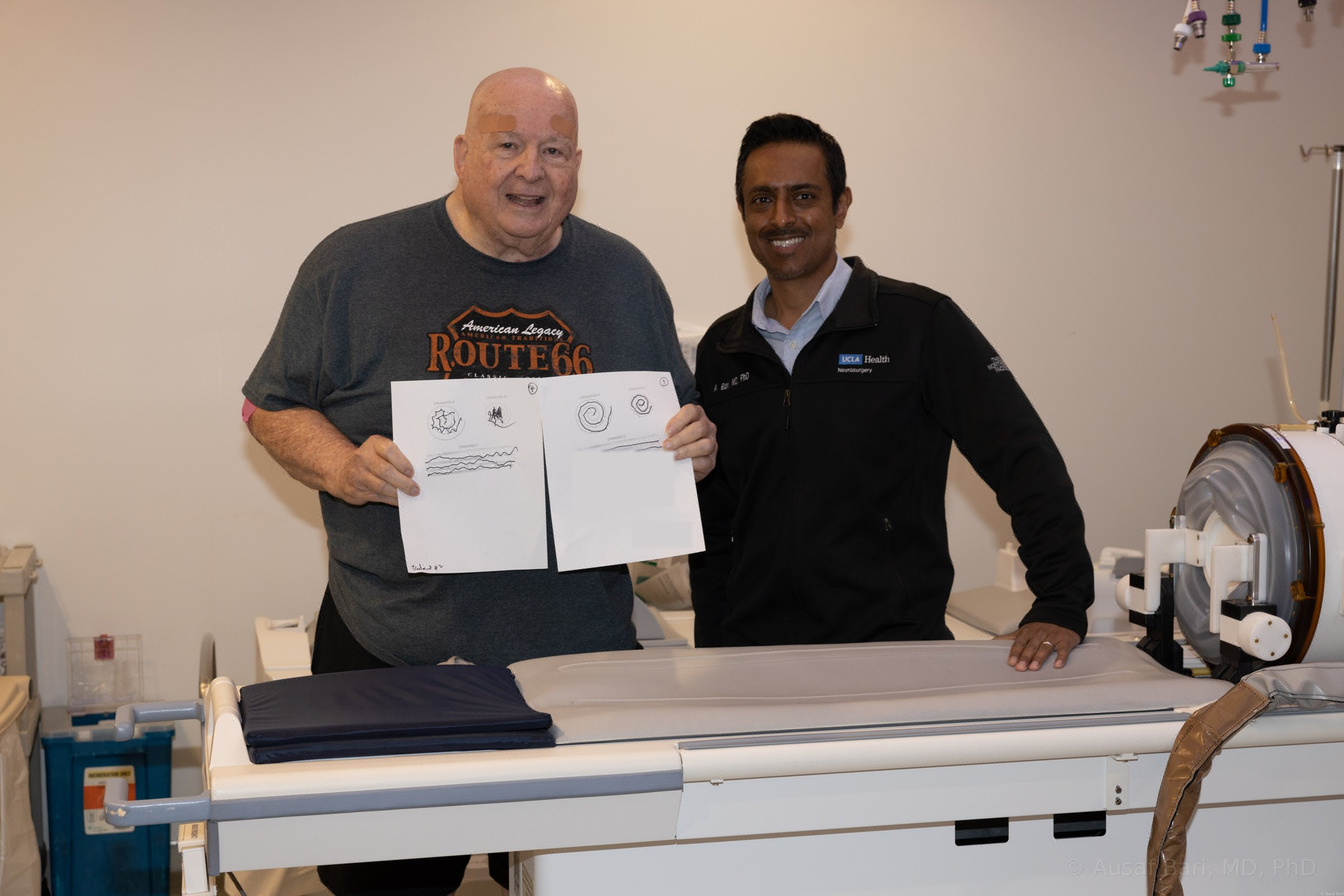
Dr. Bari with a patient in the MRI suite right after focused ultrasound treatment; the patient holds up his spiral drawings, shaky before treatment and smooth afterward
Right After Treatment: Spirals Before (Left) And After (Right)

Treatment reliably reduces tremor, and the size of the response varies from person to person. Most patients see more than 80 percent improvement in the treated hand, some see closer to 50 percent, and in Dr. Bari’s hands the average improvement across patients is about 80 percent. With focused ultrasound the change is visible in the treatment room, as the videos show. In Dr. Bari’s experience the main side effects of focused ultrasound are numbness or tingling of the face or hand in one to three percent, slurred speech in about three percent, and balance or walking difficulty in about three percent; these are usually temporary and resolve within one to two months, but they can be permanent. At your consultation he will give you a realistic picture of what treatment is likely to do for you.

06

How Focused Ultrasound Works

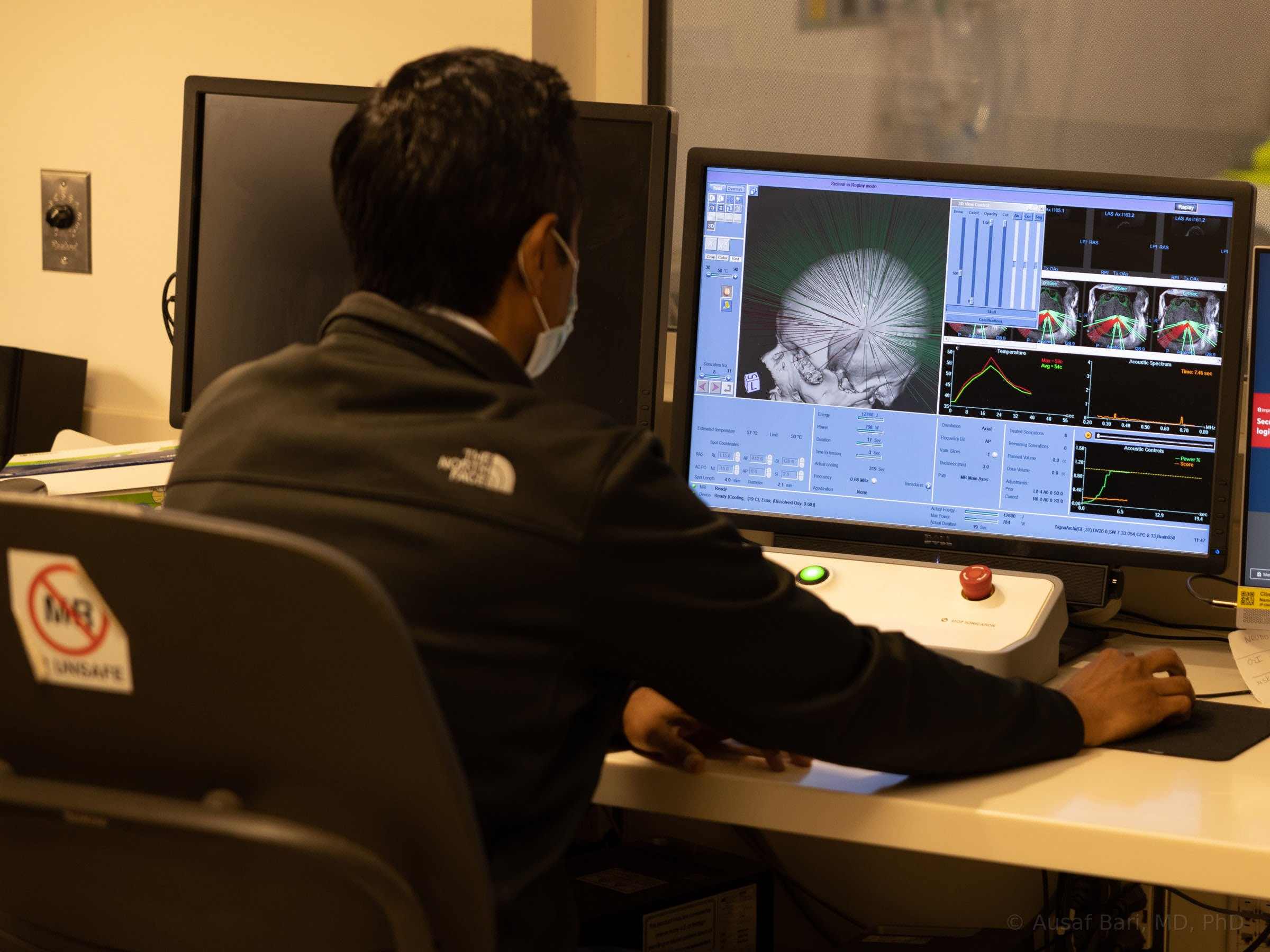
Dr. Bari at the focused ultrasound console during a treatment, with the skull model, MRI temperature map, and sonication readouts on the screen
Dr. Bari At The Controls During A Focused Ultrasound Treatment

More than a thousand ultrasound elements in a helmet send sound waves through the intact skull. Each beam is harmless on its own; where they converge on the thalamus, they heat a spot a few millimeters across and create a precise, permanent change. MRI temperature maps show the effect as it happens. You are awake the whole time, with no sedation, so Dr. Bari can check your tremor between low-energy test doses and only deliver the final treatment once the spot is right and there are no side effects. The treatment takes about an hour.

07

Your Timeline

Step one is a referral from a movement disorders neurologist, followed by a consultation with Dr. Bari, which can be done by video if you live far away. Step two is imaging in a single visit: an MRI and a CT scan of the skull, because skull thickness and density decide whether ultrasound will pass through. Step three is treatment, typically four to six weeks after the consultation, with most people home the same day or the next morning. Follow-up can be done remotely with imaging obtained near home. Dr. Bari does the evaluation, the procedure, and the follow-up himself.

Patients travel to Los Angeles from across California, neighboring states, and abroad. The scheduling team can group the imaging and treatment visits to limit trips.

08

Prepare For Your Visit

Two things make the consultation faster and more useful: the spiral test and the questionnaire. The spiral test is the same test Dr. Bari uses in clinic and in the videos above. Print the sheet, trace the spiral without resting your hand on the paper, then draw one of your own. Broken, wavy loops that get worse toward the outside are typical of essential tremor. Bring the sheet to your visit, or photograph it so you can compare it after treatment.

Download The Spiral Test (PDF)

The questionnaire covers the questions Dr. Bari asks every tremor patient. Fill it in here and print a summary, or download the fillable PDF.

Download The Fillable Questionnaire (PDF)

Nothing you enter here is sent anywhere. When you finish, the button below turns your answers into a one-page summary you can print or save as a PDF and bring to your visit. If you prefer paper, download the fillable PDF.

About you
Your tremor
Which hand do you write with?
Which side shakes?
Where does it show?
When is it worst?
Family history of tremor?
Does a drink of alcohol calm the tremor?
Medications tried for tremor
MedicationTriedHelpedDid not helpSide effects / why stopped
Propranolol (Inderal)
Primidone (Mysoline)
Gabapentin (Neurontin)
Topiramate (Topamax)
Carbidopa-levodopa (Sinemet)
Other
Effect on your life
Is the tremor disabling or significantly affecting your quality of life?
Blood thinners and medical history
Blood thinner or antiplatelet medicine?
Signs that could point to Parkinson’s disease
Prior procedures

09

Clinical Trial: Low-Intensity Focused Ultrasound

Separate from the focused ultrasound treatment Dr. Bari performs, UCLA is running a pilot study of low-intensity focused ultrasound pulses aimed at the same thalamic target. These pulses do not make a lesion; the question is whether gentle, repeated stimulation over six sessions in about two weeks can safely and temporarily calm tremor. Adults 18 to 90 with essential tremor for at least three years may qualify; people with DBS electrodes or on blood thinners are not eligible. See all open clinical trials.

10

Common Questions

Does Insurance Cover Focused Ultrasound For Tremor?

Medicare has covered MRI-guided focused ultrasound for essential tremor nationwide since 2020, and most major insurers cover it. Coverage for tremor-dominant Parkinson’s disease is broadening. The team verifies your coverage before treatment is scheduled.

Can Both Hands Be Treated?

With focused ultrasound, one side is treated at a time; the second side can be considered in selected patients after nine months or more. Deep brain stimulation treats both sides in one operation and also helps head and voice tremor.

Am I Too Old?

No. Age is not a barrier for focused ultrasound, which has no incision and no anesthesia. Overall health, walking and balance, and skull anatomy matter more than age.

What If I Take Blood Thinners?

Blood thinners are usually held for about a week around focused ultrasound or DBS. If they cannot be stopped safely, radiosurgery is an option that needs no interruption.

Will My Tremor Come Back?

Focused ultrasound makes a permanent change, and most patients keep most of their benefit for years. A minority see some return of tremor over time; that can be discussed at your visit, and DBS can be adjusted if tremor changes.

What Is The Skull Density Ratio?

The CT scan gives a number that describes how well ultrasound passes through your skull. A ratio of about 0.4 or higher is needed. If yours is lower, Dr. Bari will guide you toward DBS or radiosurgery instead.

I Have Parkinson’s Disease. Does This Apply To Me?

Yes, for tremor-dominant Parkinson’s disease. Focused ultrasound thalamotomy and pallidotomy are both FDA-approved for Parkinson’s, and DBS remains the choice when stiffness, slowness, and fluctuations need treatment as well. See the Parkinson’s page.

Where Can I Read More?

The full question and answer page covers essential tremor, Parkinson’s disease, DBS, and focused ultrasound in detail: candidacy, what each procedure involves, risks, recovery, batteries and MRI, insurance, and travel.

Why Patients Choose Dr. Bari For Tremor

Experience With Every Tremor Treatment.

Dr. Bari is Vice Chair of Neurosurgery and Director of Functional and Epilepsy Neurosurgery at UCLA. He was among the first in the region to offer MRI-guided focused ultrasound for tremor and has experience performing it since 2014, making him one of the most experienced neurosurgeons on the West Coast. He also performs deep brain stimulation, with more than 500 implants, and radiosurgery, so you are offered the treatment that fits you rather than the one a practice happens to own. He sees you himself at every step.

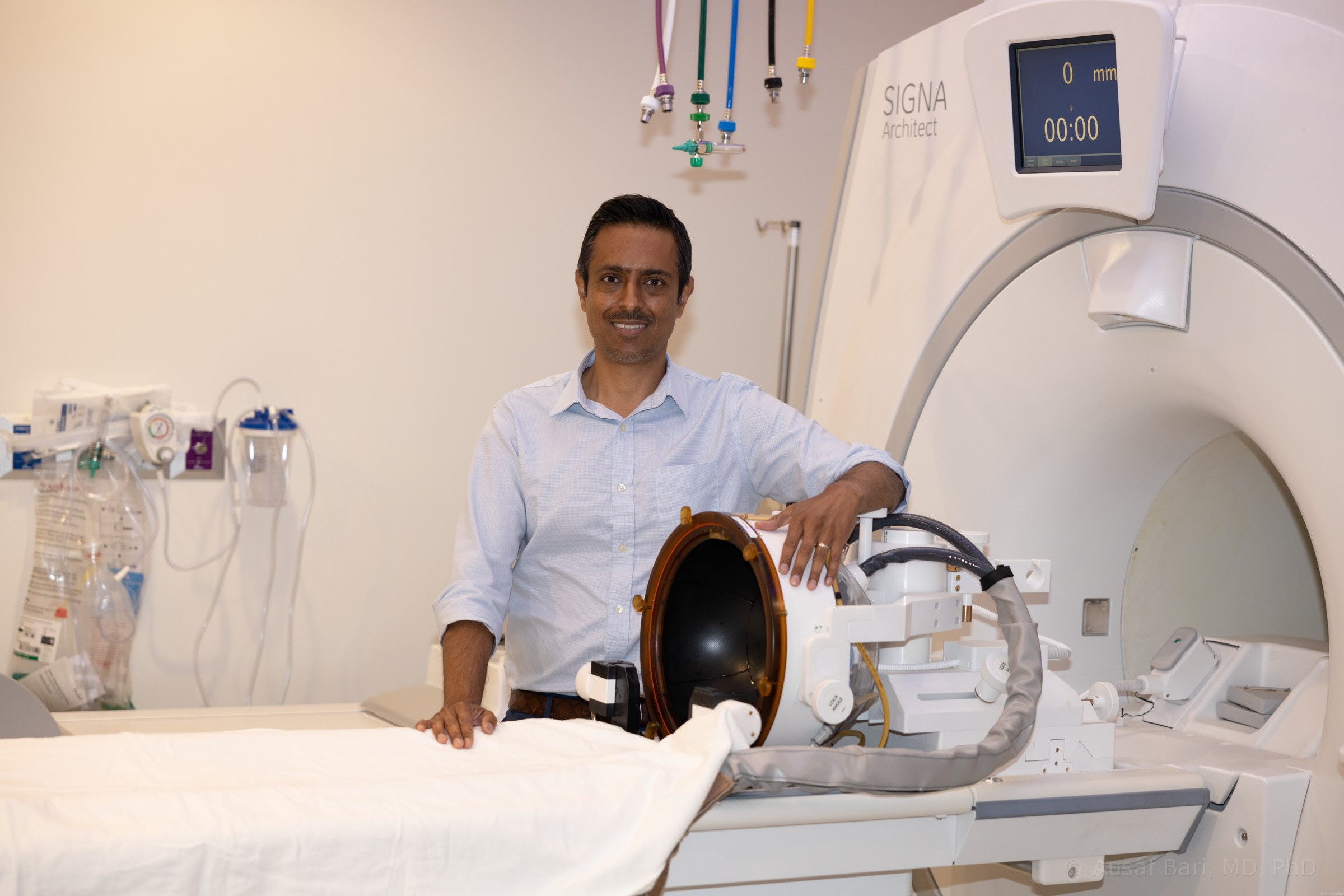
Dr. Bari standing beside the focused ultrasound transducer helmet on the table of the 3T MRI scanner in the treatment suite
Consultations In Los Angeles

Ready To Steady Your Hands?

Call or request a consultation. If you live outside Los Angeles, ask about a video visit to start.

Call 310-825-5111Request A Consultation