How It Works
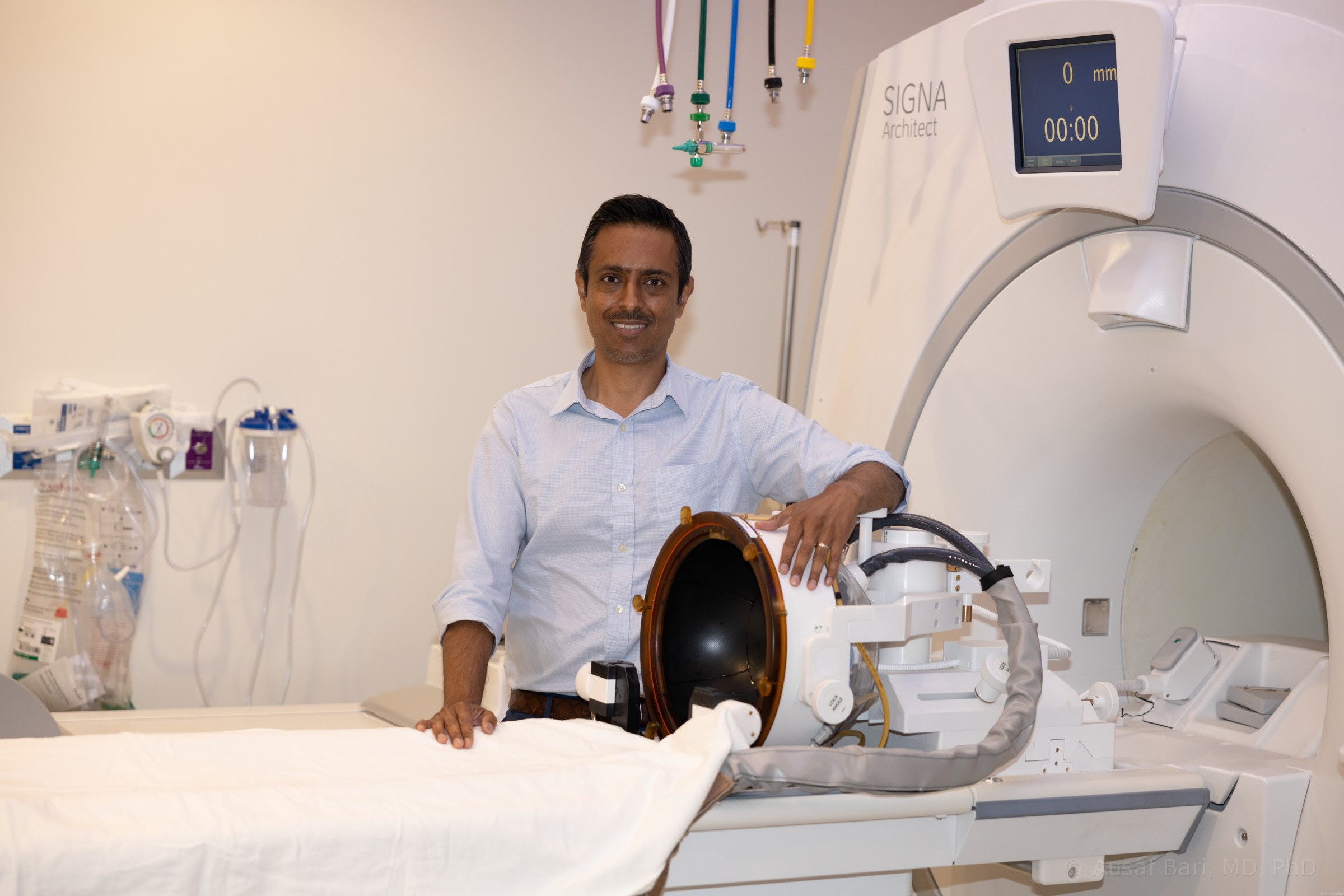
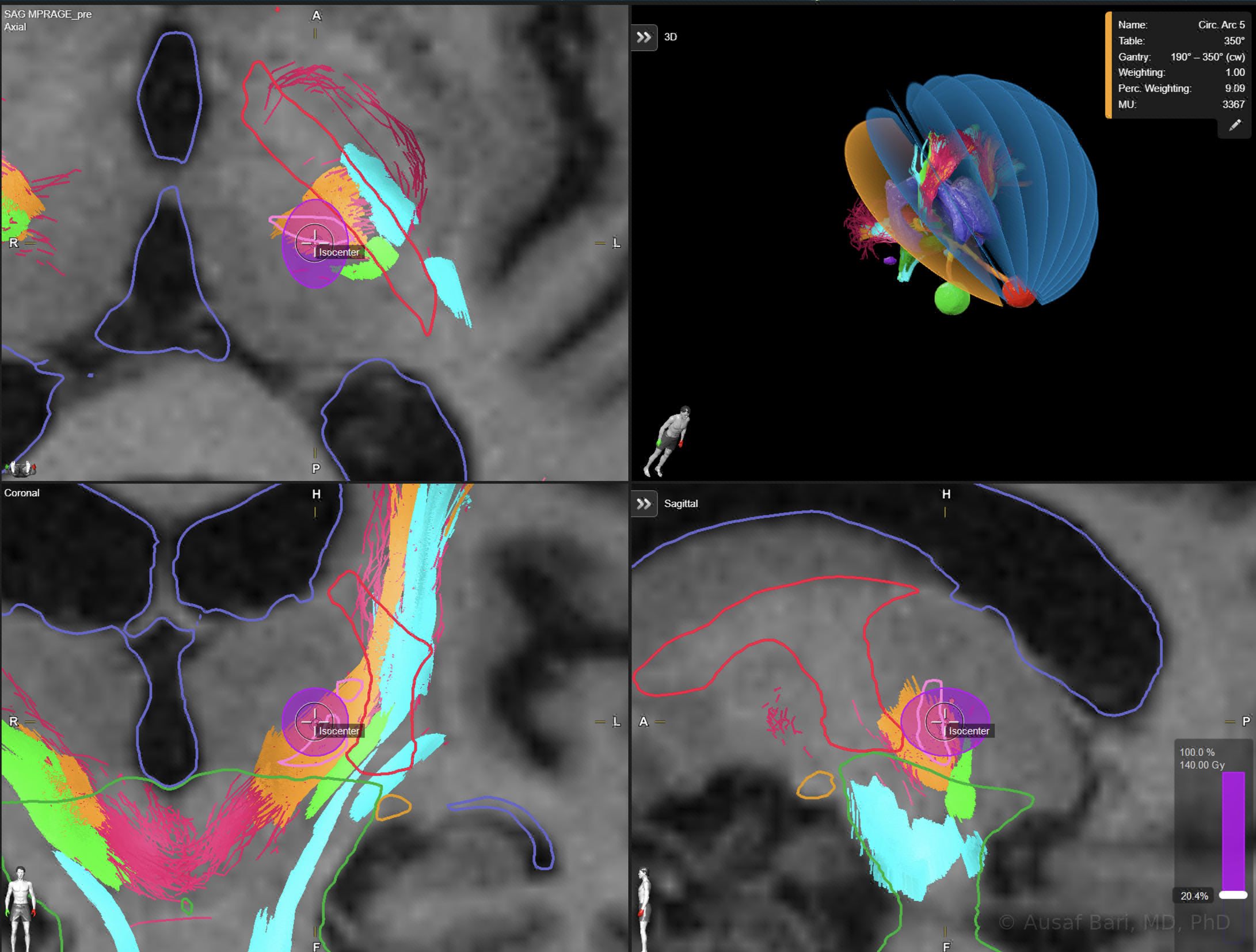
Many thin beams of radiation are aimed at the target from different directions. Each beam alone is too weak to cause harm; where they converge, the combined dose changes the tissue. Dr. Bari uses a LINAC (linear accelerator) platform. Treatment is planned on high-resolution MRI and CT, and the head is held steady with a custom mask or a light frame.
What Dr. Bari Treats With Radiosurgery
Dr. Bari holds a joint appointment in Radiation Oncology and uses radiosurgery for three main purposes:
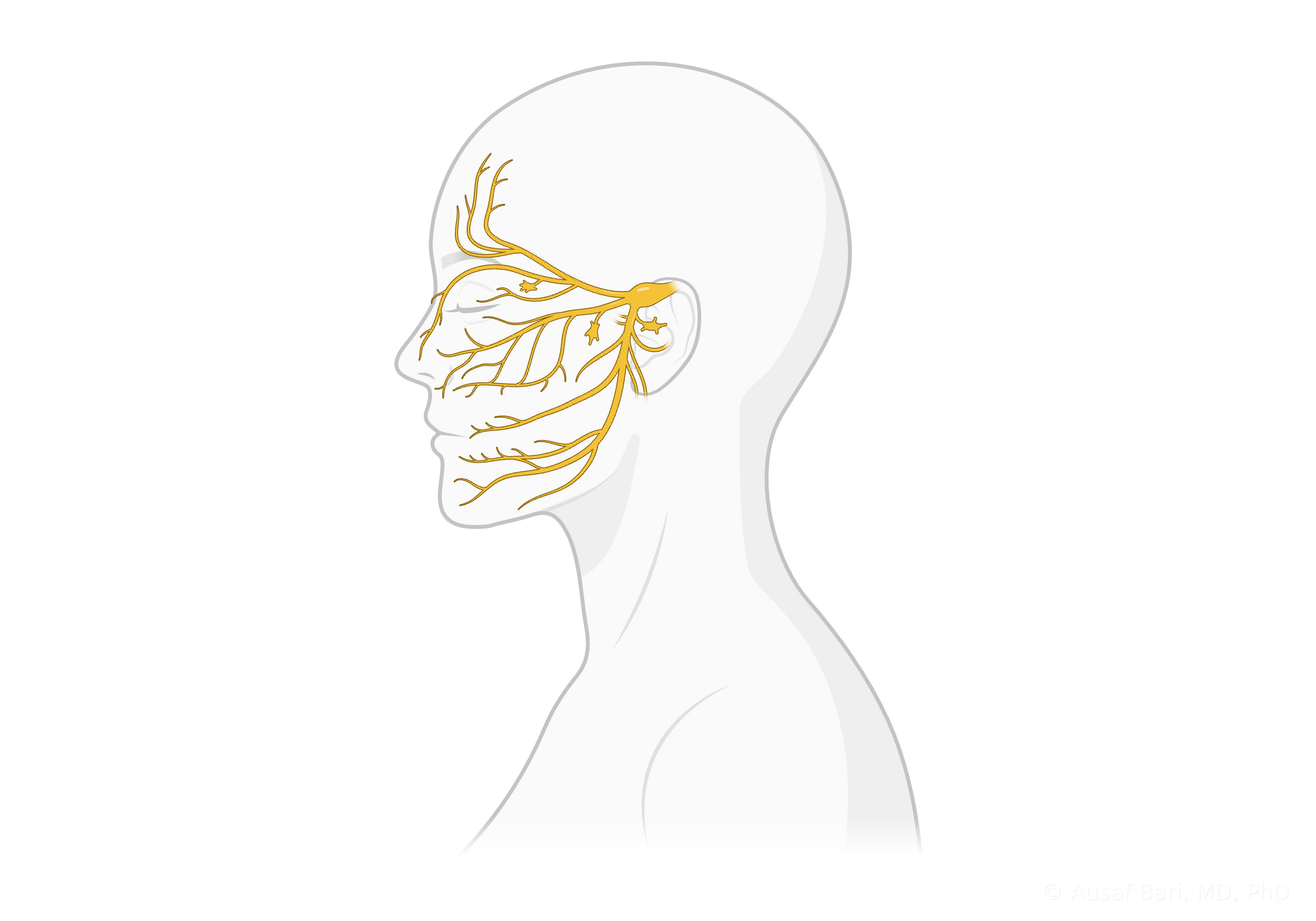
- Trigeminal neuralgia: the nerve root is treated in a single session. Relief develops over weeks. Pain usually returns after two to five years on average and treatment can be repeated. Some patients develop facial numbness.
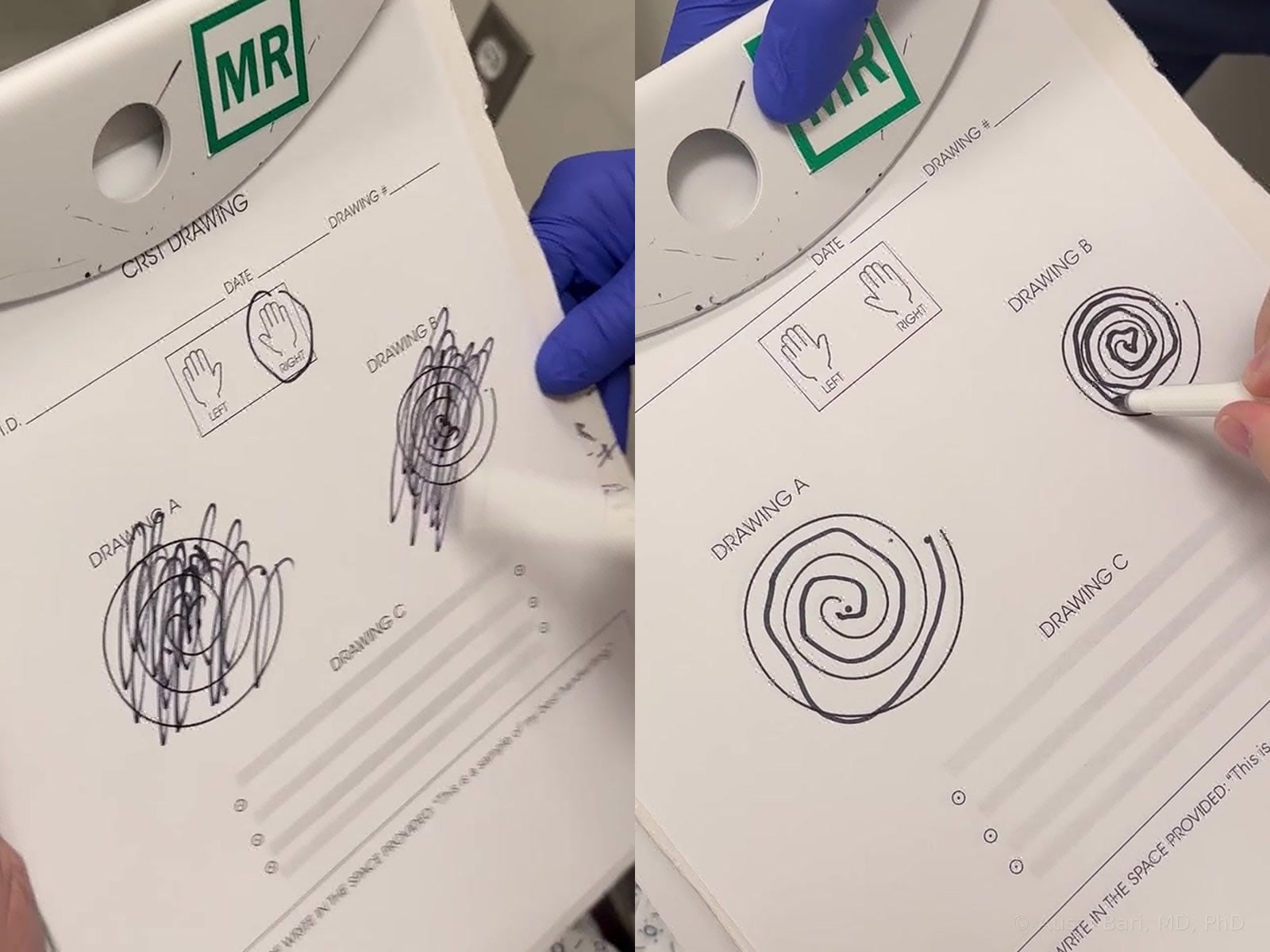
- Tremor: for patients with essential tremor or Parkinson’s tremor who cannot have deep brain stimulation or focused ultrasound, for example because of blood thinners, heart or lung disease, or skull anatomy that blocks ultrasound. The effect develops over months.
- Brain tumors: selected metastases and benign tumors, planned together with radiation oncology and neuro-oncology.
What To Expect
Planning imaging is done first. The treatment itself is an outpatient session, usually under an hour, with no sedation. You can go home the same day and return to normal activity immediately. Because radiation acts gradually, benefit takes weeks for trigeminal neuralgia and months for tremor. Follow-up MRI tracks the response.
Tradeoffs
Radiosurgery is the least invasive option, and that is its main advantage. In exchange, its effect is delayed, it cannot be adjusted afterward, and for trigeminal neuralgia it is less durable than microvascular decompression. Dr. Bari will explain where it sits among your options rather than presenting it as the default.
Questions For Your Consultation
- Am I a candidate for surgery or focused ultrasound, or is radiosurgery the better fit for me?
- How long will it take to see a benefit?
- What are the chances of numbness or other side effects?
- What follow-up imaging will I need?