Start With A Detailed Evaluation
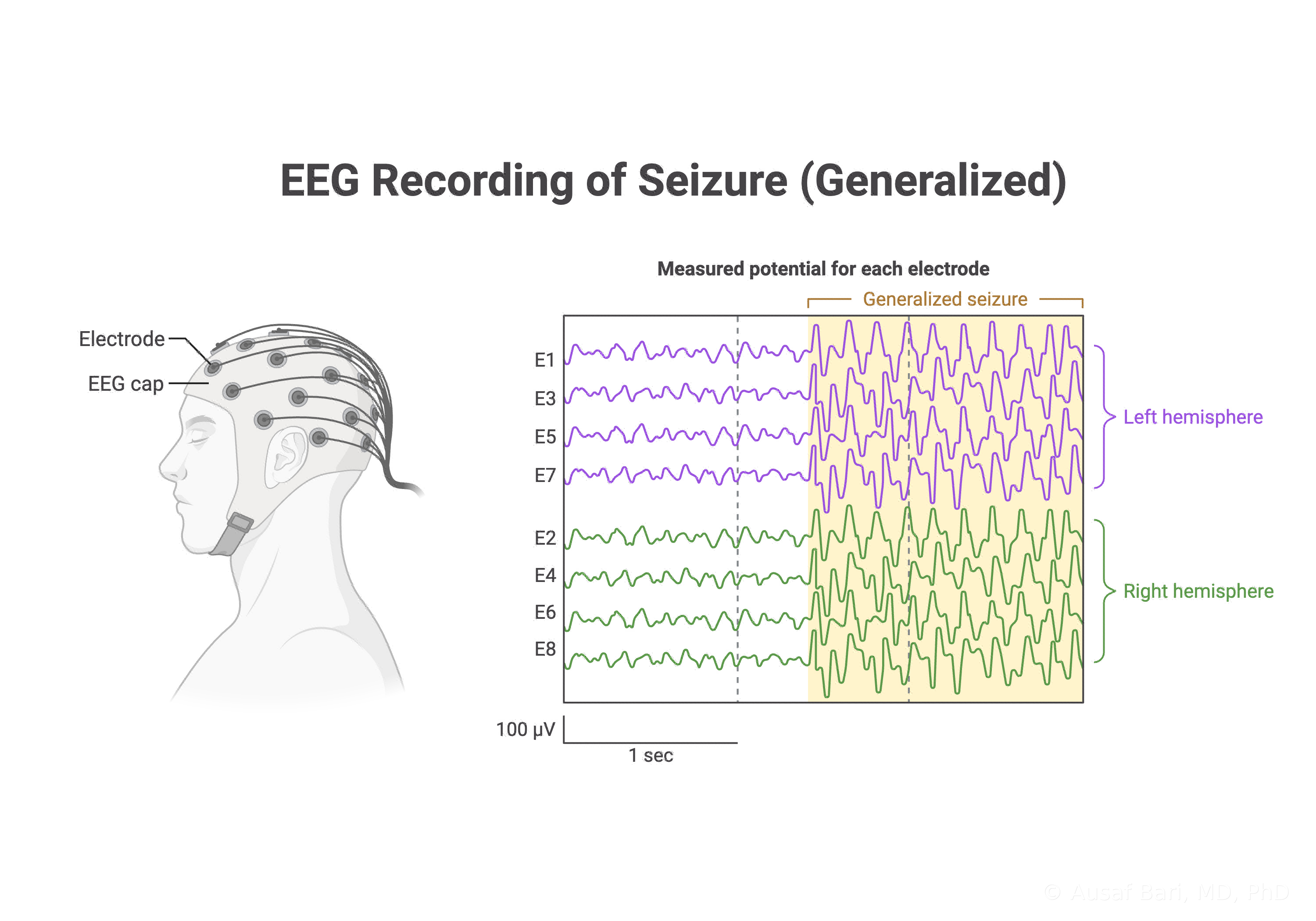
Roughly one in three people with epilepsy continues to have seizures despite medication, and once two appropriately chosen medicines have failed, the chance that a third will control seizures is small. Surgical evaluation is badly under-used. It begins with video-EEG monitoring, high-resolution MRI, and often PET imaging and neuropsychological testing, to answer two questions: where do the seizures begin, and what brain functions live nearby?
Stereo-EEG And Brain Mapping
When scalp recordings and imaging do not agree, stereo-EEG places thin electrodes through small openings in the skull to record from inside the brain for several days. The recordings show where seizures begin and how they spread, and stimulation through the same electrodes maps nearby functions such as language and movement. Dr. Bari performs this procedure and co-directs the fellowship that trains surgeons in it. The result is a treatment plan tailored to your seizure network rather than a guess.
Choosing Among Three Paths
Every plan falls into one of three paths: remove the focus (resection), destroy it through a tiny opening (laser ablation), or leave the tissue in place and calm the network with a device (neuromodulation). The evaluation decides which path is possible; your goals decide which is right.
| Resection | Laser Ablation (LITT) | Neuromodulation (VNS, DBS, RNS) | |
|---|---|---|---|
| What it does | Removes the seizure focus | Heats and destroys the focus with a laser fiber | Stimulates the seizure network with an implanted device |
| Best suited to | One well-defined focus in tissue that can be removed safely | A small, well-localized focus such as the hippocampus | Seizures that start in more than one place, in tissue that must be preserved, or that cannot be localized |
| Goal | Seizure freedom | Seizure freedom | Fewer and milder seizures, improving over years |
| Opening | Craniotomy | About the size of a grain of rice | Small incisions for the device and leads; VNS involves no brain surgery |
| Hospital stay | Several days | Usually overnight | Usually overnight or same day |
| Reversible | No | No | Yes; the device can be turned off or removed |
Resection
When seizures begin in one well-defined area that can be removed safely, resection offers the best chance of seizure freedom. In temporal lobe epilepsy, the most common surgical form in adults, a landmark randomized trial found 58 percent of surgical patients free of disabling seizures at one year versus 8 percent with medication alone, and long-term seizure freedom after temporal lobe surgery is about 60 percent. Risks include a small visual field defect, memory changes, and the usual risks of brain surgery, and they are weighed carefully against the burden of continued seizures.
Common operations include temporal lobectomy or selective removal of the hippocampus and amygdala, removal of a cortical dysplasia or tumor, and, in severe one-sided epilepsy, disconnection of a hemisphere. Awake mapping or stereo-EEG stimulation maps are used when the focus sits near language or movement areas.
Laser Ablation (LITT)
Laser interstitial thermal therapy treats a well-defined focus, such as the hippocampus, through an opening the size of a grain of rice, guided by MRI temperature maps in real time. Recovery is faster than after open surgery, often with better preservation of memory and language, at the cost of a somewhat lower chance of seizure freedom for temporal lobe epilepsy. It is a good option for small, well-localized targets.
Laser ablation is also used for hypothalamic hamartoma, periventricular nodular heterotopia, and small deep lesions that would be difficult to reach with open surgery.
Neuromodulation
Three FDA-approved devices treat epilepsy by stimulation, and Dr. Bari implants all of them. Each is covered in the same detail below so you can see how they differ.
Vagus Nerve Stimulation (VNS)
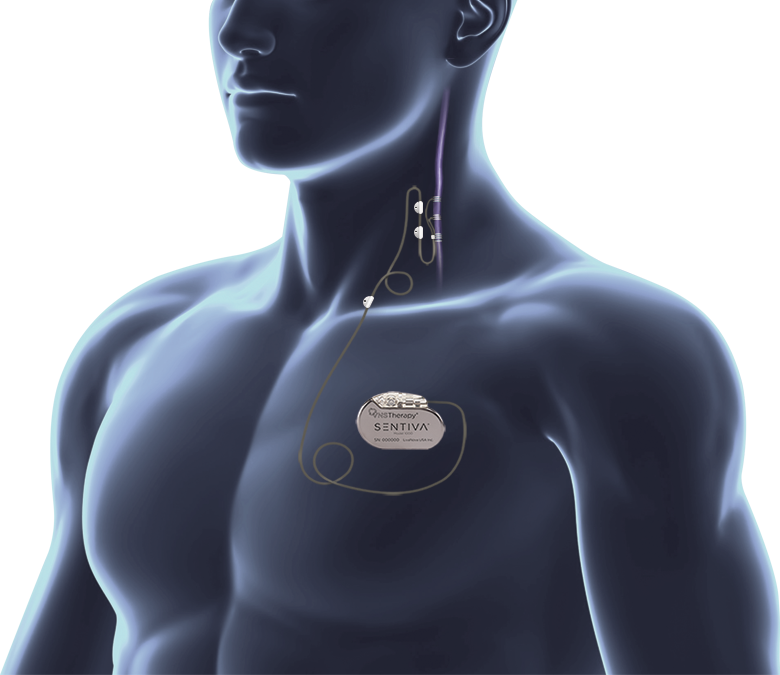
Where it goes: a generator under the skin of the upper chest and a lead coiled around the left vagus nerve in the neck. No brain surgery. An outpatient procedure of about an hour.
How it works: regular pulses travel up the vagus nerve to the brainstem and thalamus and raise the seizure threshold across the brain. Newer generators add automatic stimulation when the heart rate rises at the start of a seizure, and a magnet lets you or a family member trigger an extra dose.
Who it suits: focal or generalized epilepsy when the focus cannot be removed, children, and people who prefer to avoid brain surgery. Results: about half of patients have at least a 50 percent reduction, improving through the first two years. Side effects: hoarseness, cough, or throat tingling during stimulation, usually mild and adjustable. The battery is replaced in a short procedure after several years.
Deep Brain Stimulation (DBS)
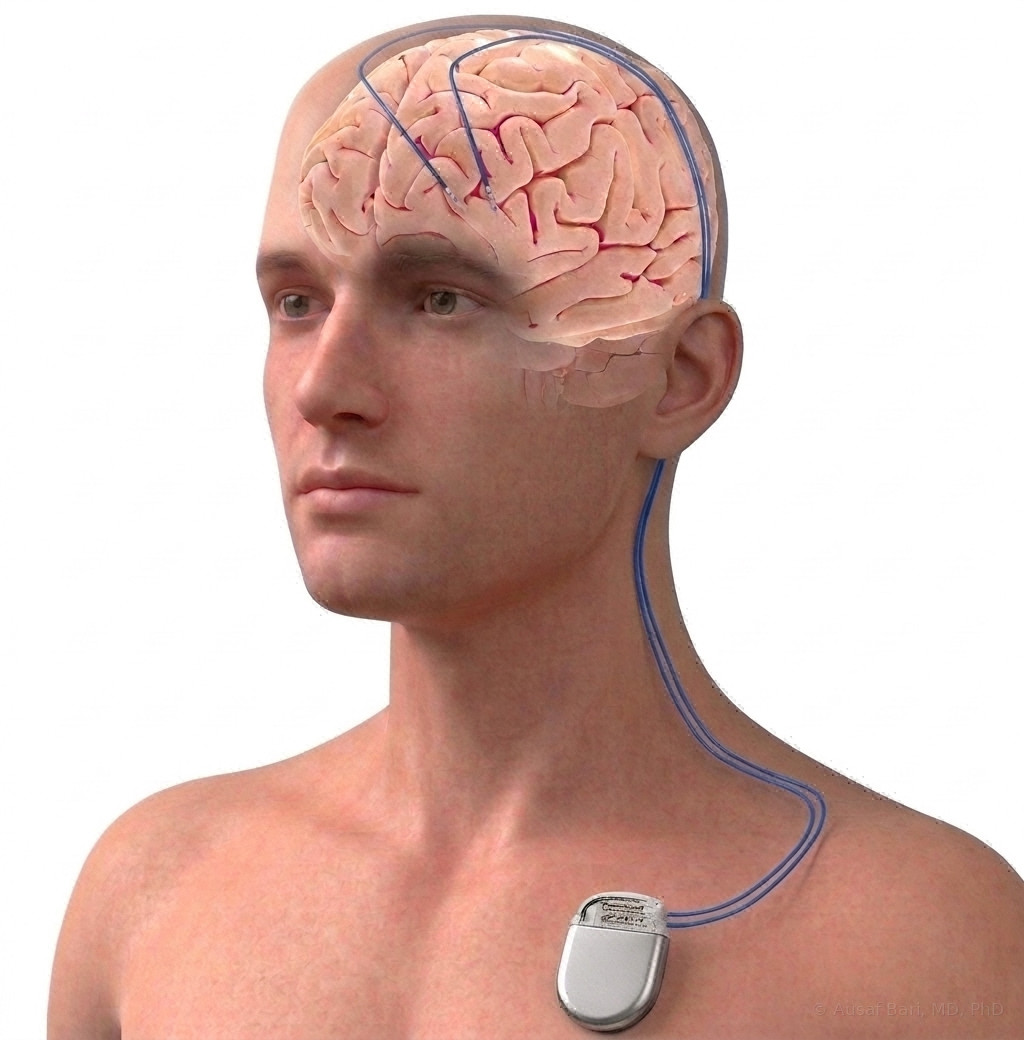
Where it goes: thin electrodes placed in the thalamus on both sides, connected by wires under the skin to a generator in the chest. Placed with the same stereotactic technique Dr. Bari uses for movement disorders, usually with an overnight stay.
How it works: continuous or cycling stimulation of a thalamic relay quiets the network that seizures spread through. Anterior nucleus (ANT) DBS was FDA approved in 2018 for focal epilepsy that starts in more than one area or cannot be localized; in the SANTE trial seizures fell 40 percent with stimulation versus 15 percent without, and the median reduction reached 69 percent at five years. The centromedian nucleus (CM) is a second target with growing use for generalized epilepsies, including Lennox-Gastaut syndrome and idiopathic generalized epilepsy, where seizures involve the whole brain at once.
Who it suits: focal epilepsy with multiple or unlocalized onset (ANT), and generalized or multifocal epilepsy (CM). Dr. Bari uses sensing generators that record thalamic activity, so programming is guided by what the brain is doing rather than by trial and error, and the recordings support his research on seizure forecasting. Side effects can include mood or memory changes and, rarely, bleeding or infection.
Responsive Neurostimulation (RNS)
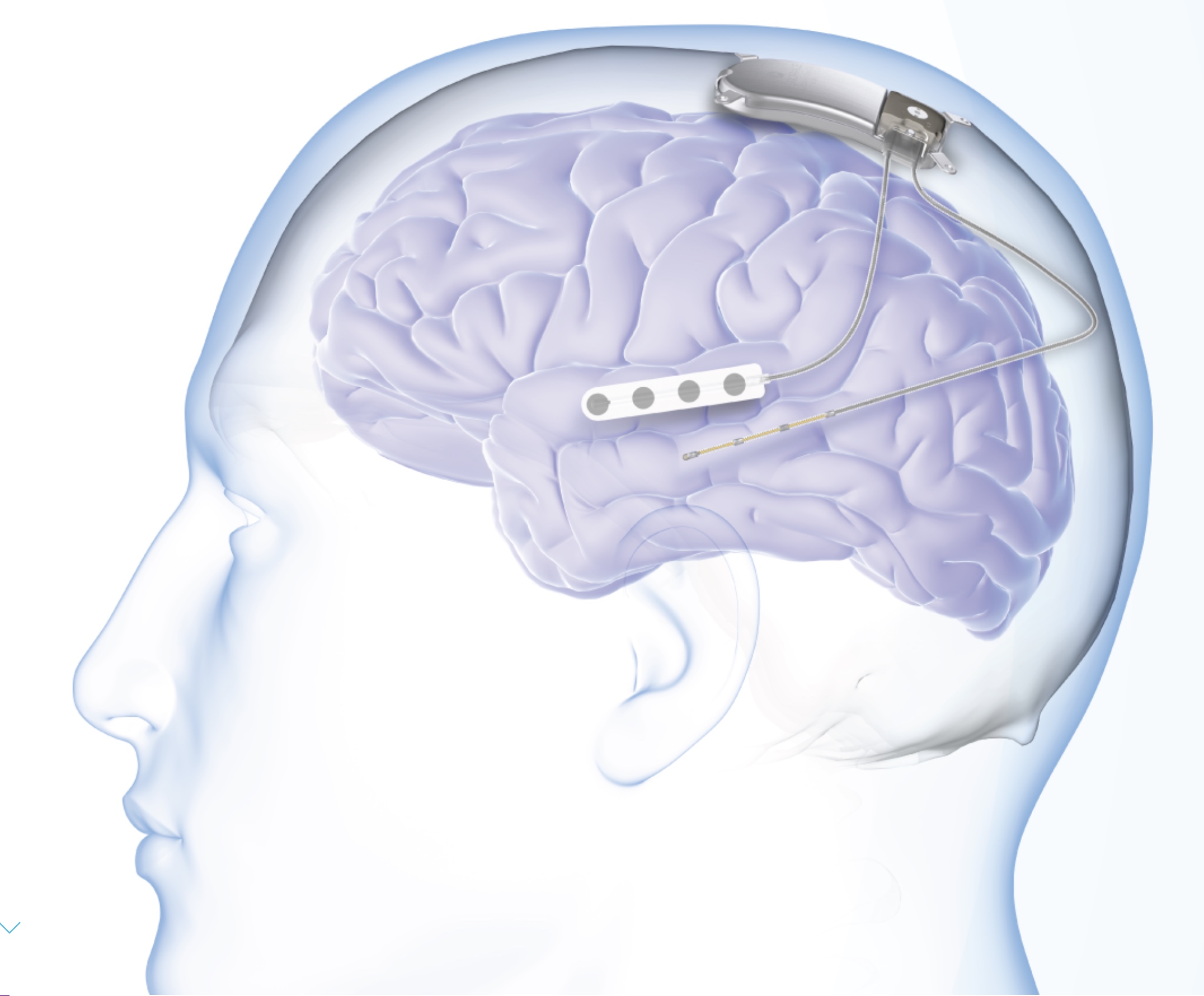
Where it goes: a small, curved device set flush into the skull, connected to one or two electrodes placed at the seizure-onset areas, either on the surface or deep in the brain. Usually an overnight stay.
How it works: the device records continuously, recognizes the electrical pattern of a seizure as it begins, and delivers a brief pulse to interrupt it. It is the only closed-loop system, responding only when needed. FDA approved in 2013. In the long-term study, median seizure reduction reached 75 percent at nine years, and the stored recordings often clarify where seizures truly start, which can change the plan.
Who it suits: seizures that begin in areas that cannot be removed, such as language or memory regions, or in two separate areas such as both temporal lobes. Responsive stimulation of the centromedian thalamus for idiopathic generalized epilepsy was studied in the NAUTILUS trial, with a 77 percent reduction in convulsive seizures at 18 months; that indication is not yet FDA approved and is offered off label in selected patients. Side effects are mainly the surgical risks of implantation; the battery is replaced after several years.
Disconnection Procedures
Corpus callosotomy divides the connection between the hemispheres and can stop drop attacks. Hemispherectomy or hemispherotomy is reserved for severe one-sided epilepsy, usually in children. Each has its place, and the evaluation determines whether one applies.
Investigational: Cell Therapy
For drug-resistant temporal lobe epilepsy, UCLA is a site in the Phase 3 EPIC trial of NRTX-1001, a one-time transplant of inhibitory nerve cells into the seizure focus. Dr. Bari performs the delivery. Details are on the epilepsy page and the cell-based therapies page.
How Referrals Work For Epilepsy
Epilepsy surgery is a team decision, and it begins with an epilepsy neurologist, not with the surgeon. Your first referral goes to the epilepsy neurologists at UCLA’s comprehensive epilepsy program, who confirm the diagnosis, review your medication history, and run the workup: video-EEG monitoring, high-resolution MRI, often PET, and neuropsychological testing. Some patients also need stereo-EEG, which Dr. Bari performs.
With the workup complete, the team meets and decides two things: first, whether you are a candidate for surgery at all, and second, which procedures fit your seizure network, from resection or laser ablation to VNS, DBS, or RNS. Dr. Bari then meets with you to go over the surgical options in detail. If you or your neurologist would like to start that process, call and ask for an epilepsy referral; the team will direct it to the right place.
Goals, Tradeoffs & Follow-Up
Seizure freedom and seizure reduction are different goals, and the likelihood of each depends on the proposed treatment. Resection and ablation aim for freedom; stimulation devices usually aim for fewer and milder seizures, with benefit that grows over time. Discuss potential effects on memory, thinking, and movement, and the follow-up needed for medication or an implanted device.
Questions For Your Consultation
- Do we know where my seizures begin?
- Which of the three paths applies to me, and why?
- If a device, why VNS, DBS, or RNS for my seizure type?
- What are the chances of seizure freedom versus fewer seizures for me?