The Bari Lab

Human Neuroscience.
New Possibilities.

Dr. Bari studies human brain circuits at the scale of individual neurons and connected networks. His research combines direct recordings, brain imaging and clinical studies to understand how the brain shapes decisions, pain and movement, and how those insights could improve neuromodulation.

Surgical Neuromodulation And Brain Mapping Lab
Led By Ausaf Bari, MD, PhD, FAANS, FACS

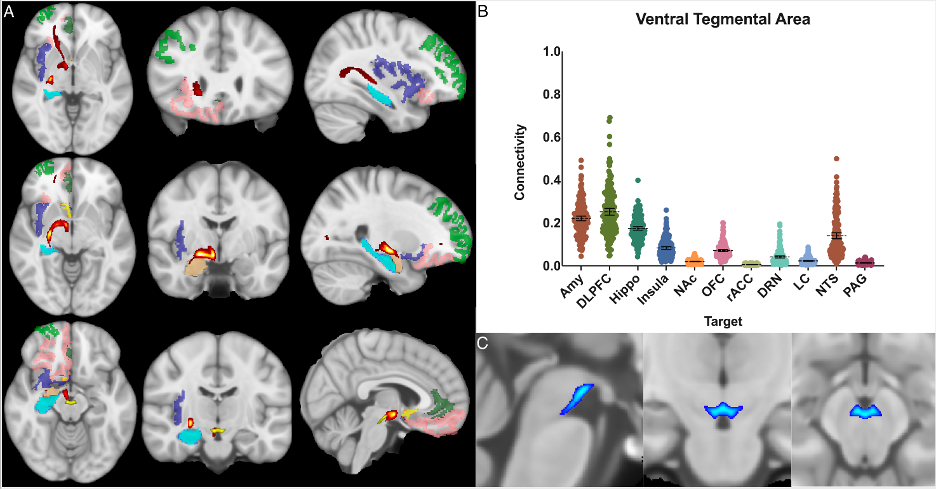
Brain connectivity maps and quantitative VTA connectivity results from Dr. Bari’s research presentation
Mapping connections in the human brain (Levinson et al., 2023)
Human Brain RecordingsStudying individual neurons and network activity directly.
NIH-Supported Pain ResearchPrincipal investigator, chronic-pain DBS project UH3NS113661.
80 PubMed-Indexed WorksExplore the full publication library, including additional verified scholarly work.
From Signals To Scientific Questions

Four Connected
Research Directions

Human recordings, brain imaging, and carefully designed clinical studies provide different views of the same question: how can a deeper understanding of brain function inform better treatment?

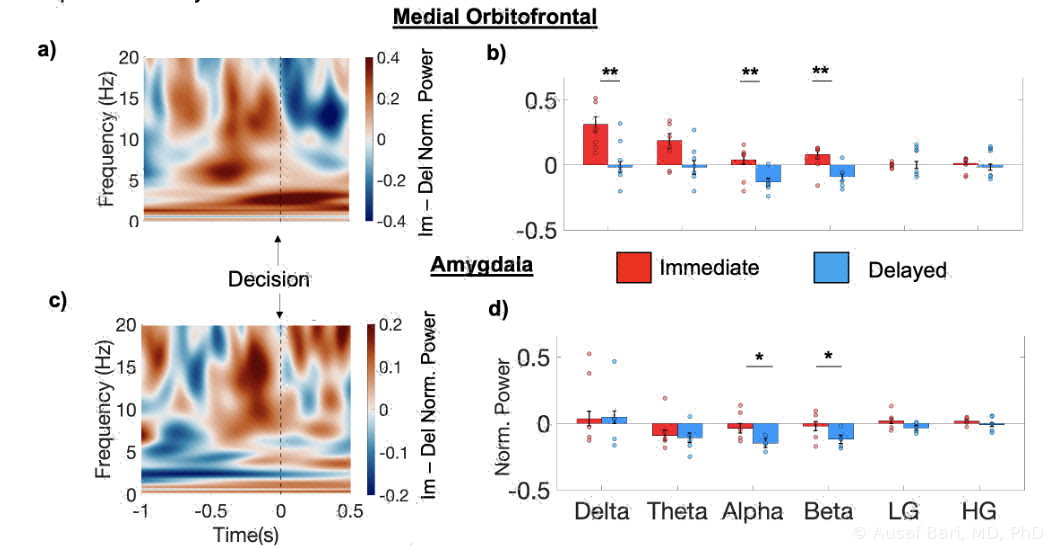
Neural activity during immediate and delayed reward decisions
Brain oscillations recorded around immediate and delayed reward choices in Dr. Bari’s lab.
01 / Research Direction

Reward, Motivation And Decisions

What happens in the brain when we choose a smaller reward now over a larger reward later? By recording individual human neurons during decision tasks, the lab studies how brain regions represent choices and decision difficulty. This work builds a foundation for understanding impulsive behavior and the circuits involved in motivation.

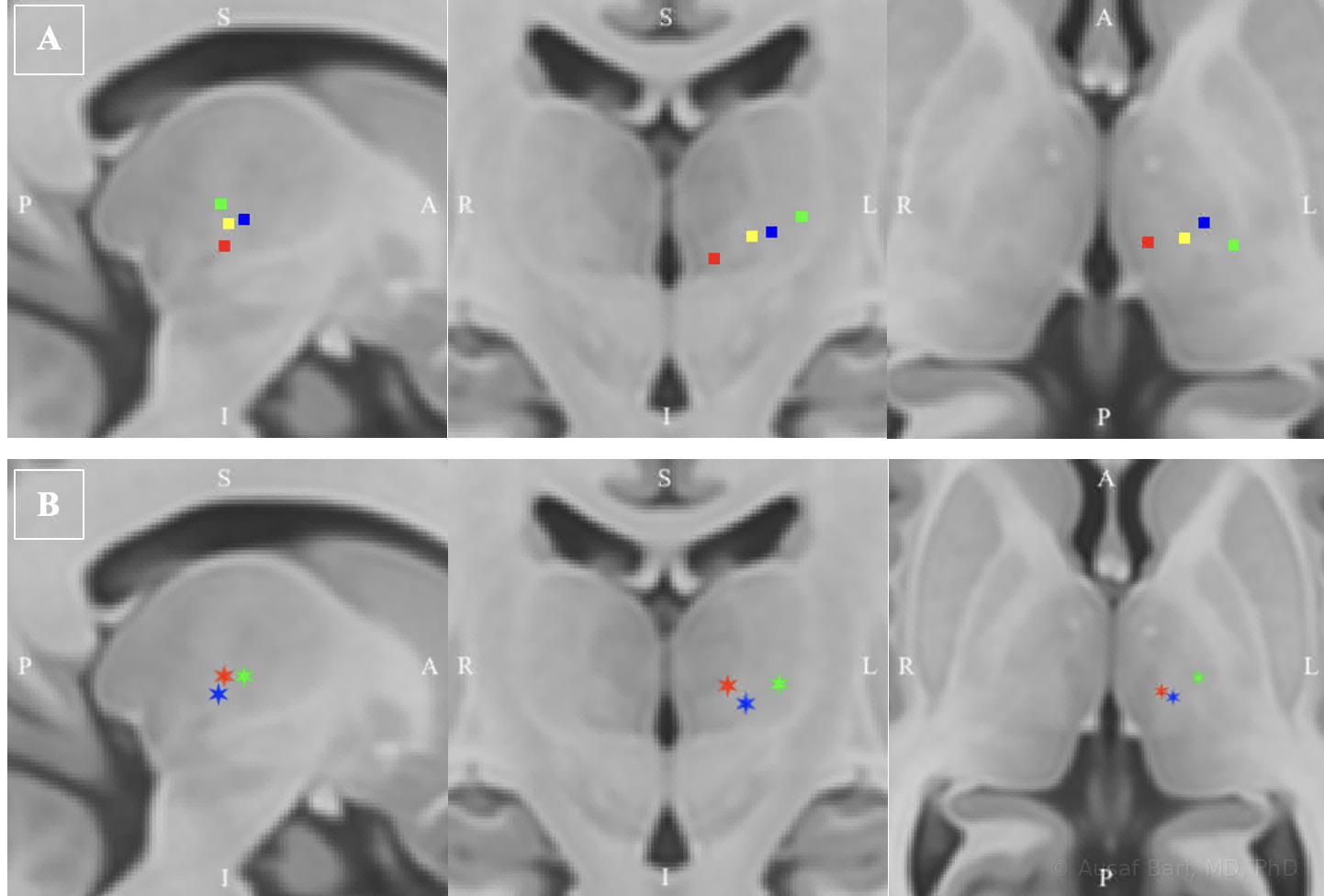
Six brain atlas views with colored markers showing mean thalamic locations associated with body and facial sensory regions
Where stimulation evoked sensation in different body and facial regions, mapped across patients by Dr. Bari and colleagues (Rifi et al., 2023).
02 / Research Direction

Understanding And Treating Chronic Pain

Pain changes from moment to moment. The lab examines how those changes relate to activity across pain-processing brain networks. Alongside this work, an NIH-supported clinical study investigates whether stimulation of the subgenual cingulate can help people with severe chronic low back pain. The goal is to connect measurable brain signals with more informed stimulation strategies.

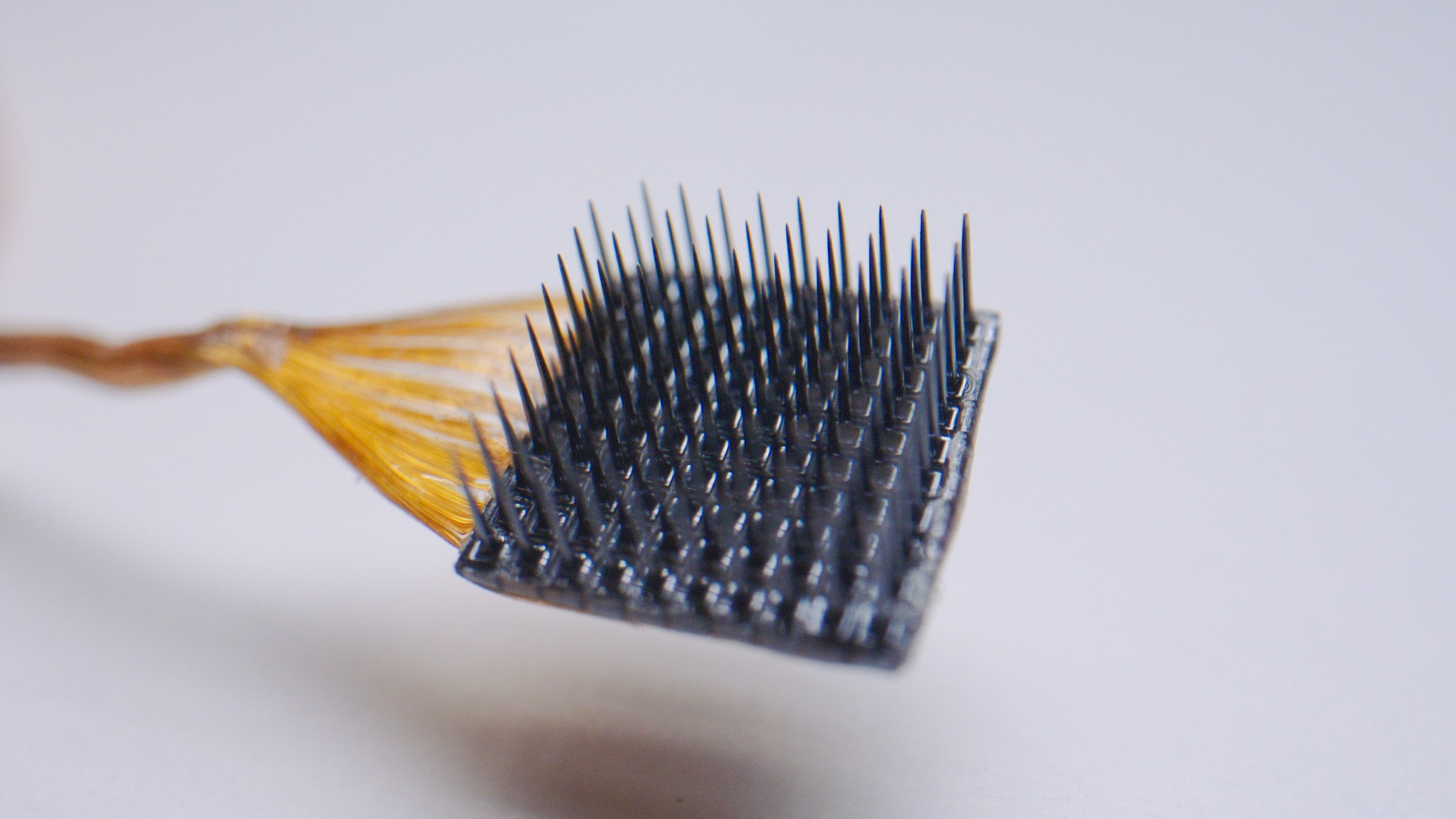
Close-up photograph of a Utah array: a square silicon chip about four millimeters across with a grid of one hundred hair-thin electrode needles and a bundle of gold wires
A Utah array, the intracortical electrode grid Dr. Bari implants in the brain-computer interface trial with Richard Andersen’s lab at Caltech.
03 / Research Direction

Brain-Computer Interfaces For Paralysis

For people paralyzed by spinal cord injury or ALS, the brain still plans movement; the signal simply cannot reach the body. In collaboration with Richard Andersen’s laboratory at Caltech, Dr. Bari implants Utah arrays, tiny grids of one hundred electrodes, into the movement-planning areas of the cortex. The recorded intentions drive a computer, a tablet, or a robotic limb, and in the lab’s published work brain recordings from two participants with tetraplegia distinguished individual finger intentions. UCLA is an enrolling site for this trial; see the clinical trials page.

Ventral tegmental area connectivity maps and measured connection strengths
Structural connectivity of the ventral tegmental area across the brain (Levinson et al., 2023).
04 / Research Direction

Mapping Brain Networks

Imaging reveals how brain regions are connected. The lab builds structural connectivity maps of deep brain nuclei and studies how thalamic pathways relate to tremor control. These complementary projects investigate connections that may guide more precise stimulation targets.

How The Work Comes Together

Measure. Map.
Test.

The research connects neurosurgery, human electrophysiology, brain imaging and computational analysis. These complementary approaches make it possible to study human brain function directly and develop testable ideas for the next generation of neuromodulation.

Listen To Neural Activity

Recordings during clinical and research procedures reveal patterns associated with choices, pain, and intended movement.

Understand The Network

MRI and computational analysis connect local signals to the broader pathways linking brain regions.

Evaluate New Approaches

Clinical studies test specific questions about stimulation, mechanisms, feasibility, and potential benefit.

Investigational therapies and brain–computer interfaces are research, with study-specific eligibility and informed consent. They are distinct from established clinical care.

The Published Work

Publication Library

Explore Dr. Bari’s research articles, reviews, chapters, and other scholarly work. Search by topic, title, journal, or author.

116 Verified Records · 1997–2026
PubMed Profile SearchGoogle ScholarORCID

116 publications

2018
Research ArticleJournal of neurology, neurosurgery, and psychiatry

Charting The Road Forward In Psychiatric Neurosurgery: Proceedings Of The 2016 American Society For Stereotactic And Functional Neurosurgery Workshop On Neuromodulation For Psychiatric Disorders.

Authors

Bari AA, Mikell CB, Abosch A, Ben-Haim S, Buchanan RJ, Burton AW, Carcieri S, Cosgrove GR, D'Haese PF, Daskalakis ZJ, Eskandar EN, Gerrard JL, Goodman WK, Greenberg BD, Gross RE, Hamani C, Kiss ZHT, Konrad P, Kopell BH, Krinke L, Langevin JP, Lozano AM, Malone D, Mayberg HS, Miller JP, Patil PG, Peichel D, Petersen EA, Rezai AR, Richardson RM, Riva-Posse P, Sankar T, Schwalb JM, Simpson HB, Slavin K, Stypulkowski PH, Tosteson T, Warnke P, Willie JT, Zaghloul KA, Neimat JS, Pouratian N, Sheth SA

Sources And Coverage

Compiled from PubMed, Dr. Bari’s public Google Scholar profile, and ORCID; reviewed September 28, 2026. Records are checked for authorship and duplicate citations. Publication types distinguish journal papers from conference abstracts, preprints, chapters, and other scholarly material. Index coverage may differ, and newly indexed work may appear on the linked profiles before it appears here.

Call 310-825-5111Request A Consultation