Why Recovery Stalls
Most recovery after a stroke happens in the first months, then slows and can plateau, and arm function can even decline from six months onward. Paired vagus nerve stimulation is designed to reopen that window by strengthening the brain’s response to each rehabilitation movement.
Stimulation Paired With Practice
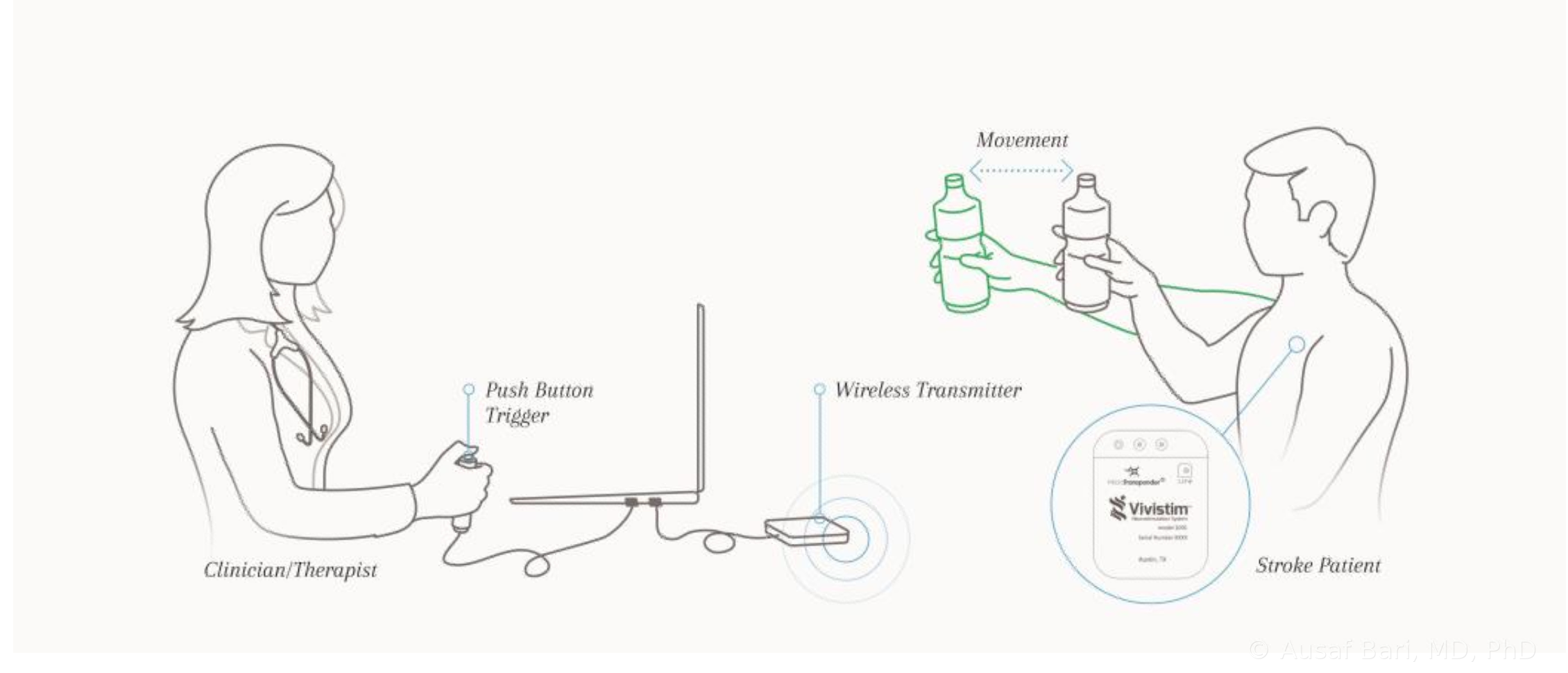
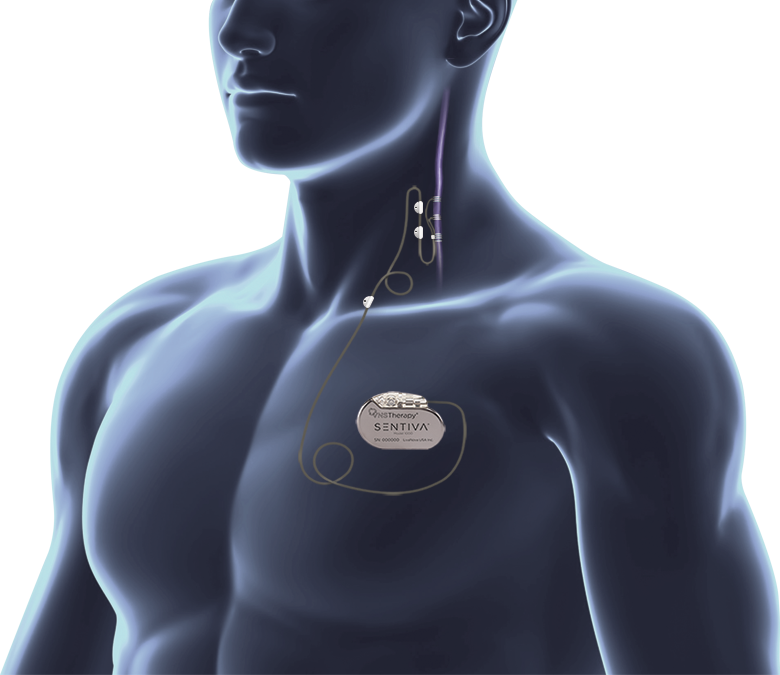
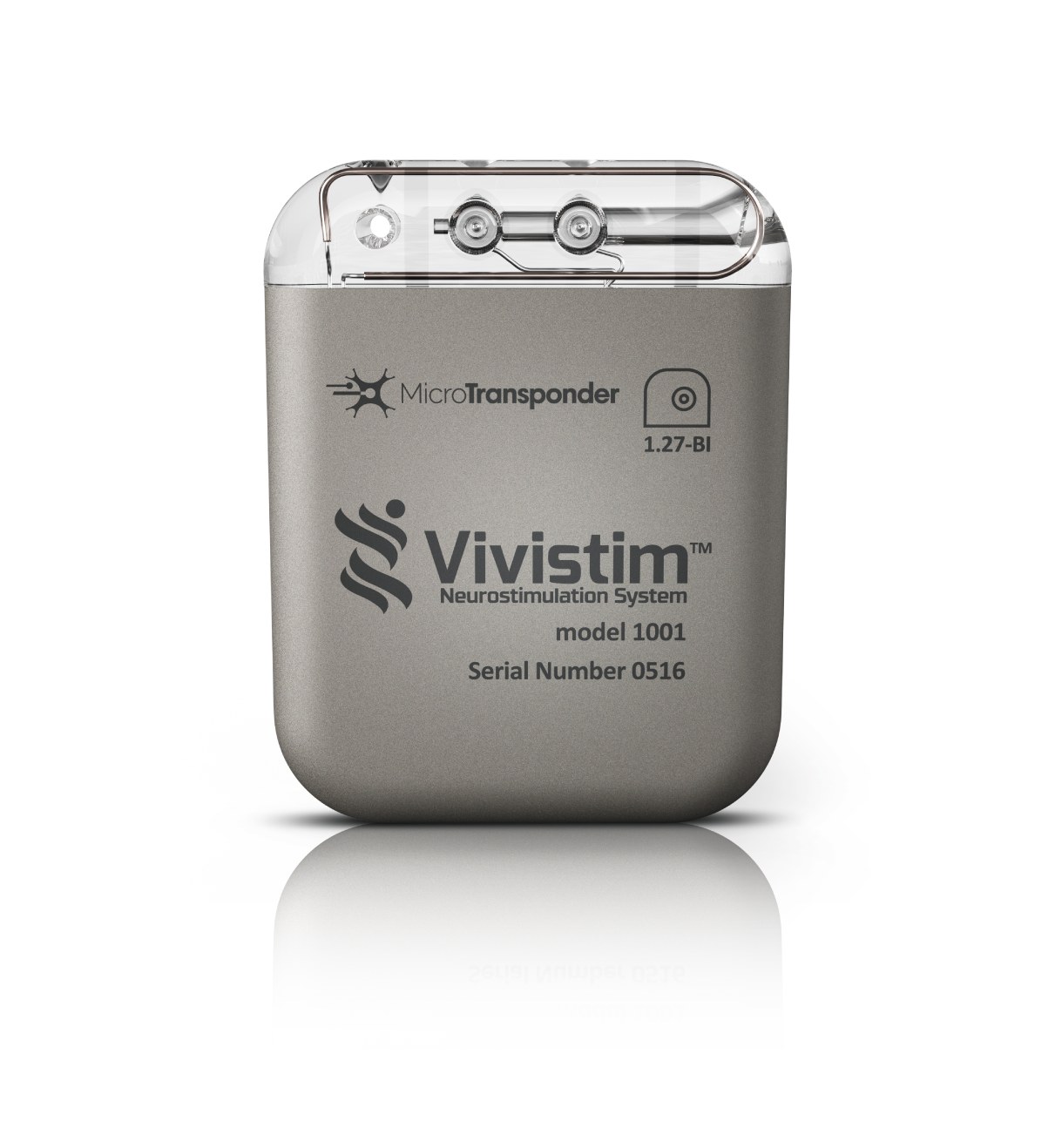
A small generator under the skin below the left collarbone connects to a lead on the vagus nerve in the neck. During therapy, the therapist presses a button to deliver a half-second burst of stimulation timed to each movement. The treatment course is six weeks of intensive therapy with the device, three sessions a week, followed by a home program in which you trigger the device yourself with a magnet.
Who May Be Considered
The FDA-approved indication is chronic ischemic stroke with moderate to severe arm impairment. The practical requirements are:
- Ischemic stroke at least nine months earlier, with moderate to severe arm and hand weakness that has plateaued.
- Able and willing to take part in six weeks of intensive rehabilitation.
- No paralysis of the vocal cords and no condition that makes surgery in the neck unsafe.
- Blood thinners can be held for about a week before the operation.
How It Works In Practice
Your neurologist or rehabilitation physician identifies you as a possible candidate and orders an upper-limb assessment by occupational or physical therapy. If the assessment fits, you are referred to Dr. Bari for a surgical evaluation. The implant is a two hour outpatient operation. Therapy begins a few weeks later with a rehabilitation team trained in paired stimulation.
Setting Realistic Expectations
Improvement varies, and the treatment is not a cure. In the pivotal trial, patients treated with paired stimulation gained more arm function than those who did rehabilitation alone, and the benefit was measured in everyday tasks. Surgery, device follow-up, and active participation in therapy are part of the commitment.
Questions To Bring
- Does my stroke history fit the indication?
- What therapy and home practice would be involved?
- Which arm and hand tasks would we track?