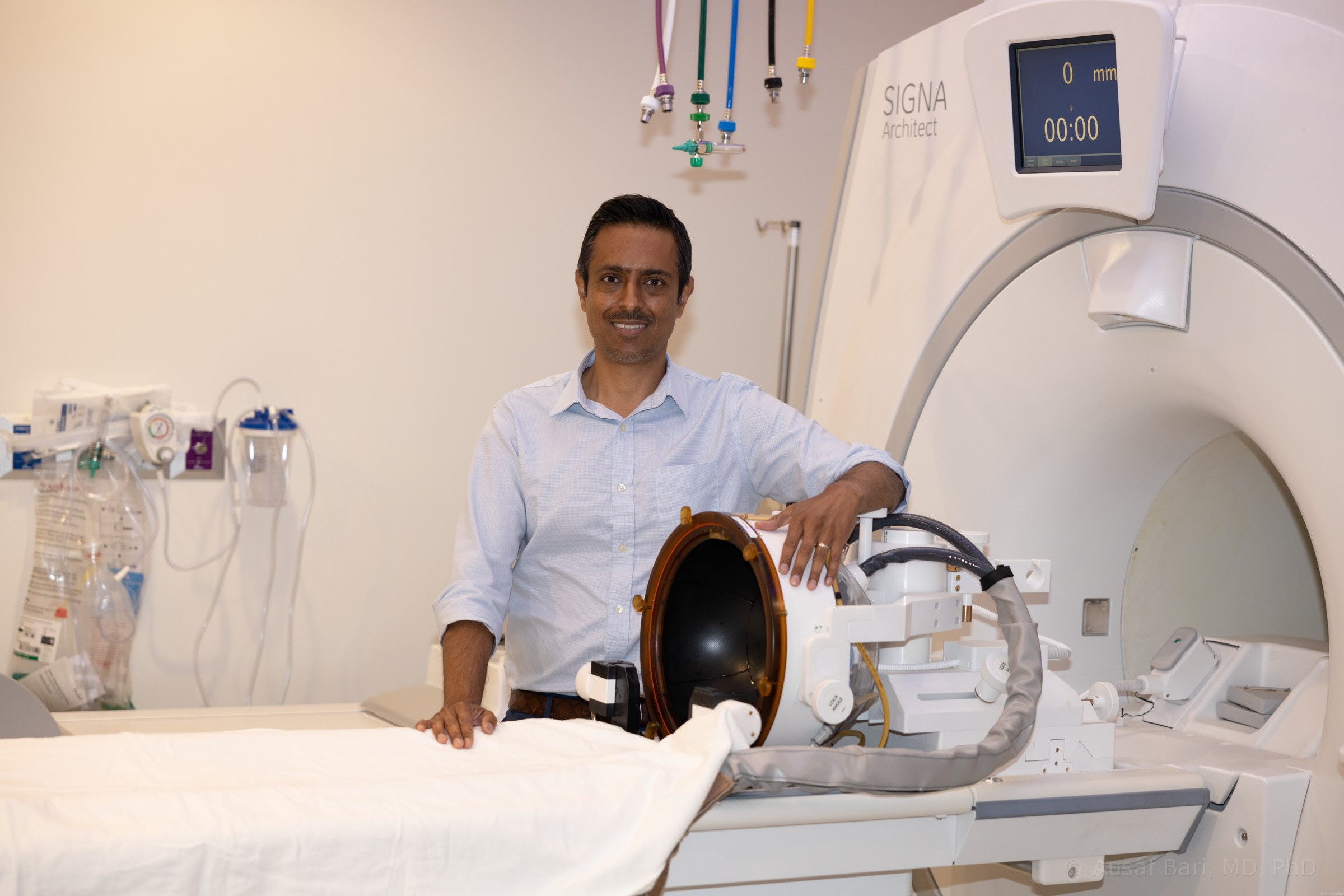
How It Works
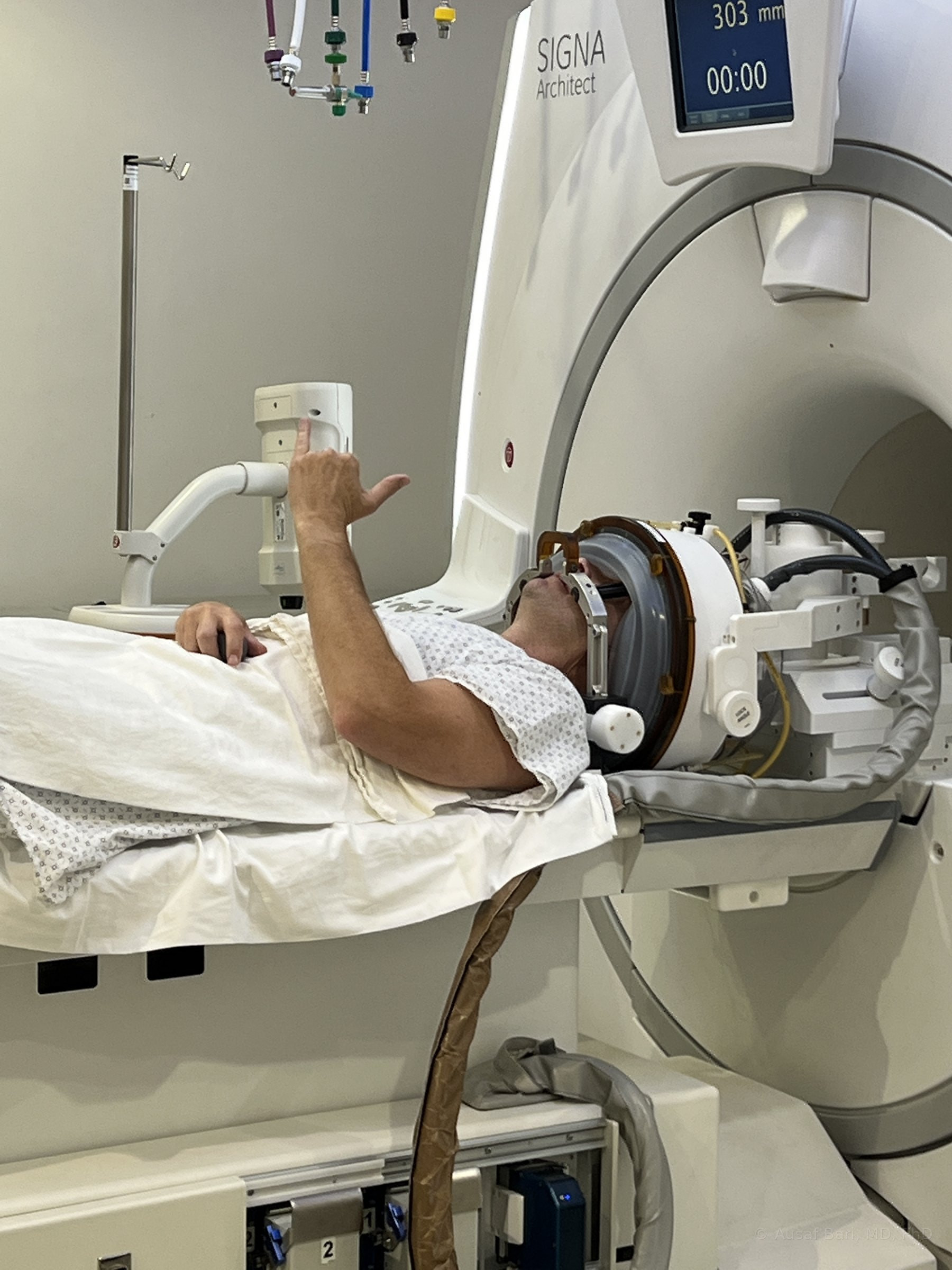
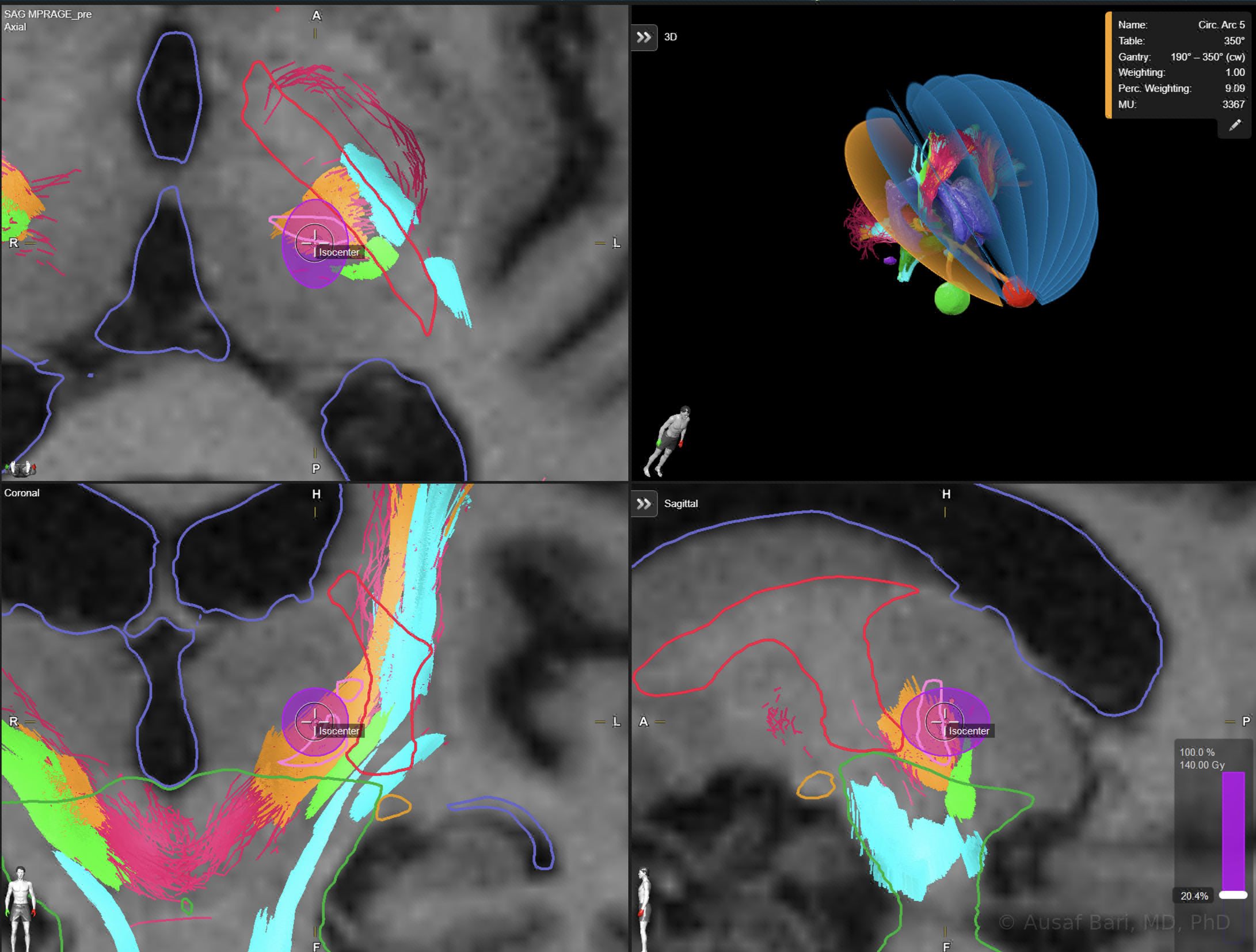
More than a thousand ultrasound elements in a helmet-shaped transducer send sound waves through the intact skull. Individually they are harmless; where they converge on a small target in the thalamus, they heat the tissue and create a precise, permanent change. Real-time MRI temperature maps confirm the location and the effect as it happens.
Who May Be A Candidate?
Three focused ultrasound treatments are FDA-approved and offered by Dr. Bari: thalamotomy for essential tremor and tremor-dominant Parkinson’s disease, pallidotomy on one side for Parkinson’s disease with dyskinesia or motor fluctuations, and staged treatment of the second side for essential tremor in selected patients. Candidacy is assessed after medication has not provided adequate control. Evaluation includes MRI safety and a CT scan of the skull, because skull thickness and density affect how well ultrasound passes through. Blood thinners are typically held for about a week before treatment. The CT scan yields a skull density ratio; a ratio of about 0.4 or higher is needed for ultrasound to pass through effectively. Patients with a lower ratio are usually guided toward DBS or radiosurgery instead.
The Referral Comes First
A movement disorders neurologist, either at UCLA or near you, confirms the diagnosis of essential tremor or Parkinson’s disease, makes sure medications such as propranolol and primidone have had a fair trial, and for Parkinson’s confirms the doses are right, then refers you for the surgical evaluation. If you do not have a movement disorders neurologist, call and the team will arrange one; the focused ultrasound consultation follows.
During Your Procedure
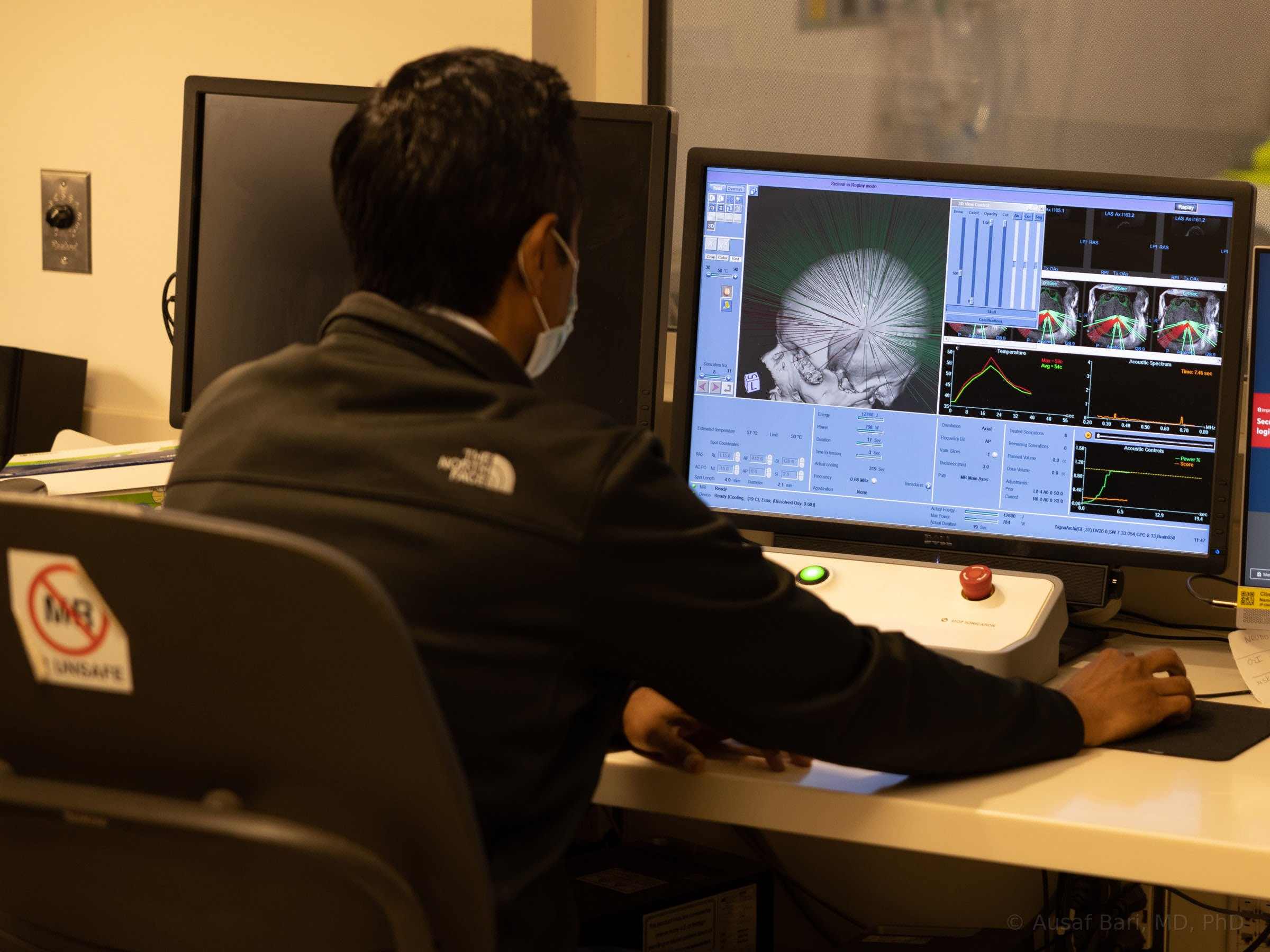
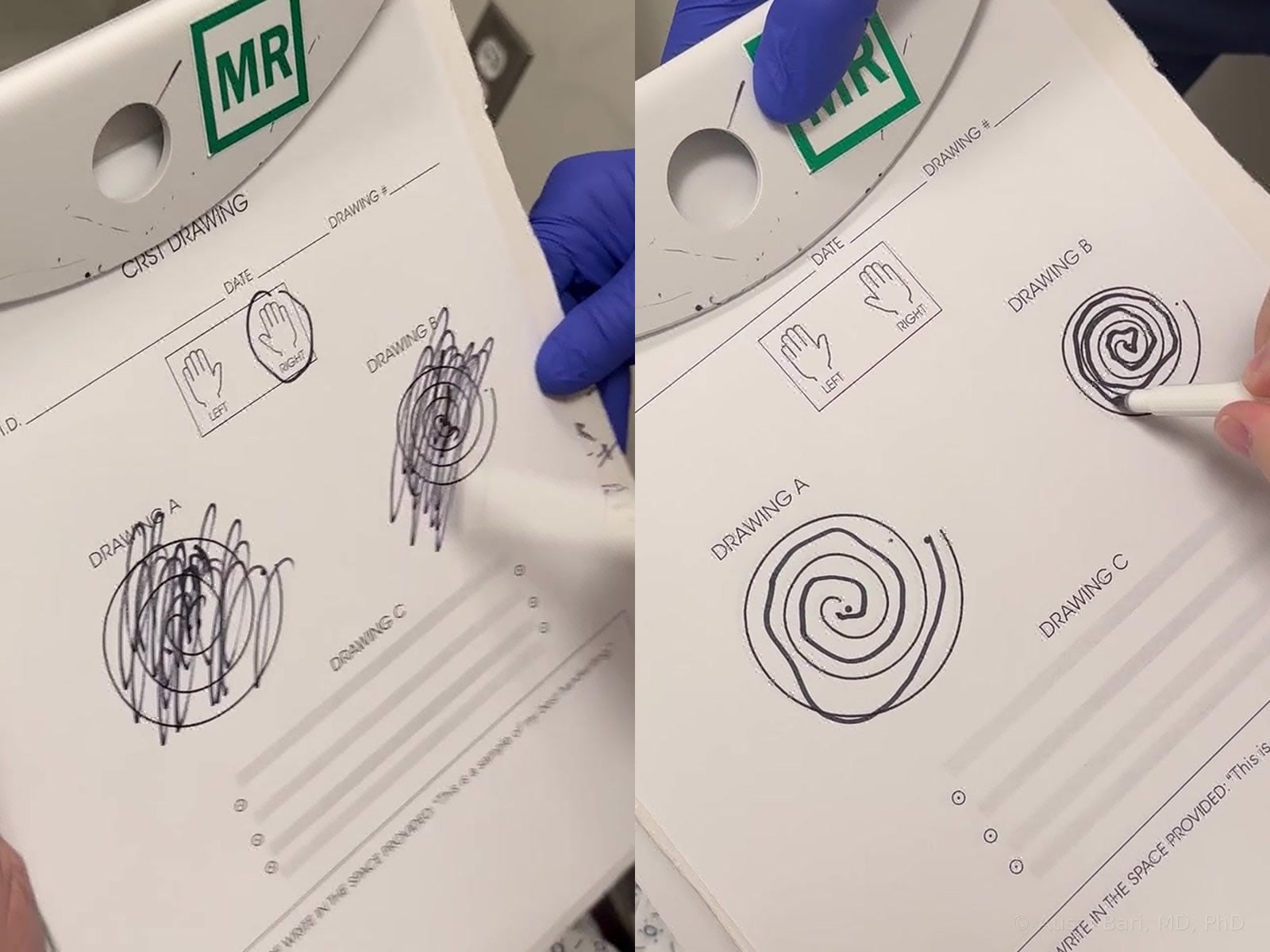
You are awake for the whole treatment, which takes about an hour, with no sedation, so that Dr. Bari can check your tremor and talk with you throughout. The head is shaved, a light frame keeps the head still, and cool water circulates around the head inside the helmet. Treatment begins with low-energy test doses so that tremor can be checked and any side effects noticed before the final treatment is delivered. You draw spirals and perform simple tasks between doses, like the patient in the videos above. Most people go home the same day or the next morning.
Fewer Trips, Faster Timeline
Dr. Bari has performed MRI-guided focused ultrasound since 2014 and is one of the most experienced neurosurgeons on the West Coast. The initial consultation can be done by video. The skull CT and MRI are done in a single visit, and treatment is typically scheduled within four to six weeks of consultation. Follow-up visits can be done remotely with imaging obtained near home. Dr. Bari does the evaluation, the procedure, and the follow-up himself.
How Much Improvement To Expect
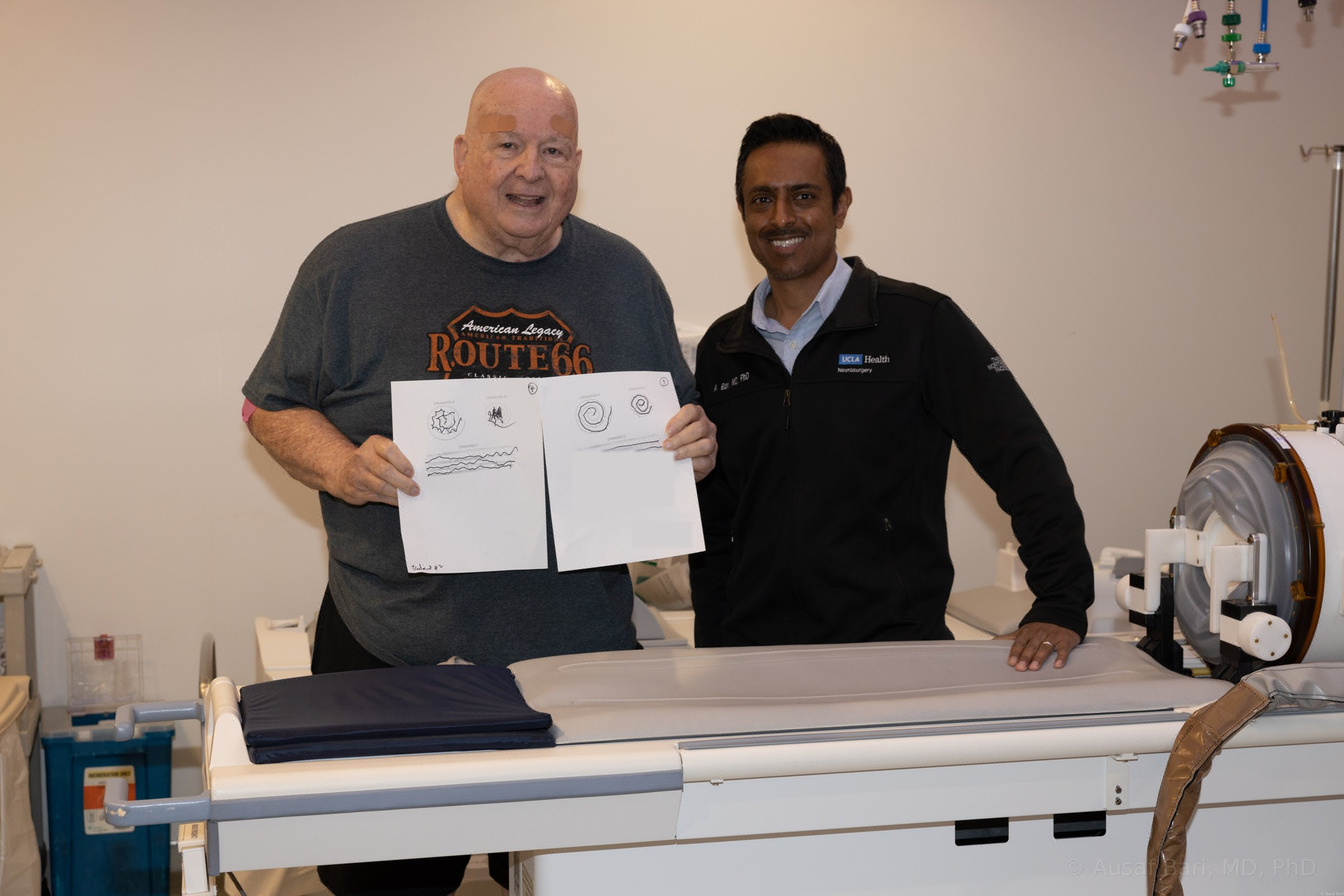
Focused ultrasound reliably reduces tremor, but the size of the response varies from person to person. Most patients see more than 80 percent improvement in the treated hand, some see closer to 50 percent, and in Dr. Bari’s hands the average improvement across patients is about 80 percent. The change is usually visible in the treatment room, and the spiral drawings on this page show what that range looks like on paper.
At your consultation Dr. Bari will review your tremor, your imaging, and your goals so you have a realistic picture of what treatment is likely to do for you before you decide.
Benefits & Tradeoffs
There is no incision, no implanted hardware, and no battery to maintain, and tremor improvement is usually apparent in the treatment room. Unlike DBS, the change cannot be adjusted afterward, and it treats one side at a time; the second side can be considered no sooner than nine months later in selected patients. In Dr. Bari’s experience the main side effects are numbness or tingling of the face or hand in one to three percent, slurred speech in about three percent, and balance or walking difficulty in about three percent. When they occur they are usually temporary, resolving within one to two months, but they can be permanent.
Questions For Your Consultation
- How do focused ultrasound and DBS compare for my tremor?
- What is realistic for the hand and activities I want to improve?
- How do my walking, balance, MRI safety and skull anatomy affect candidacy?