What Happens In The Brain
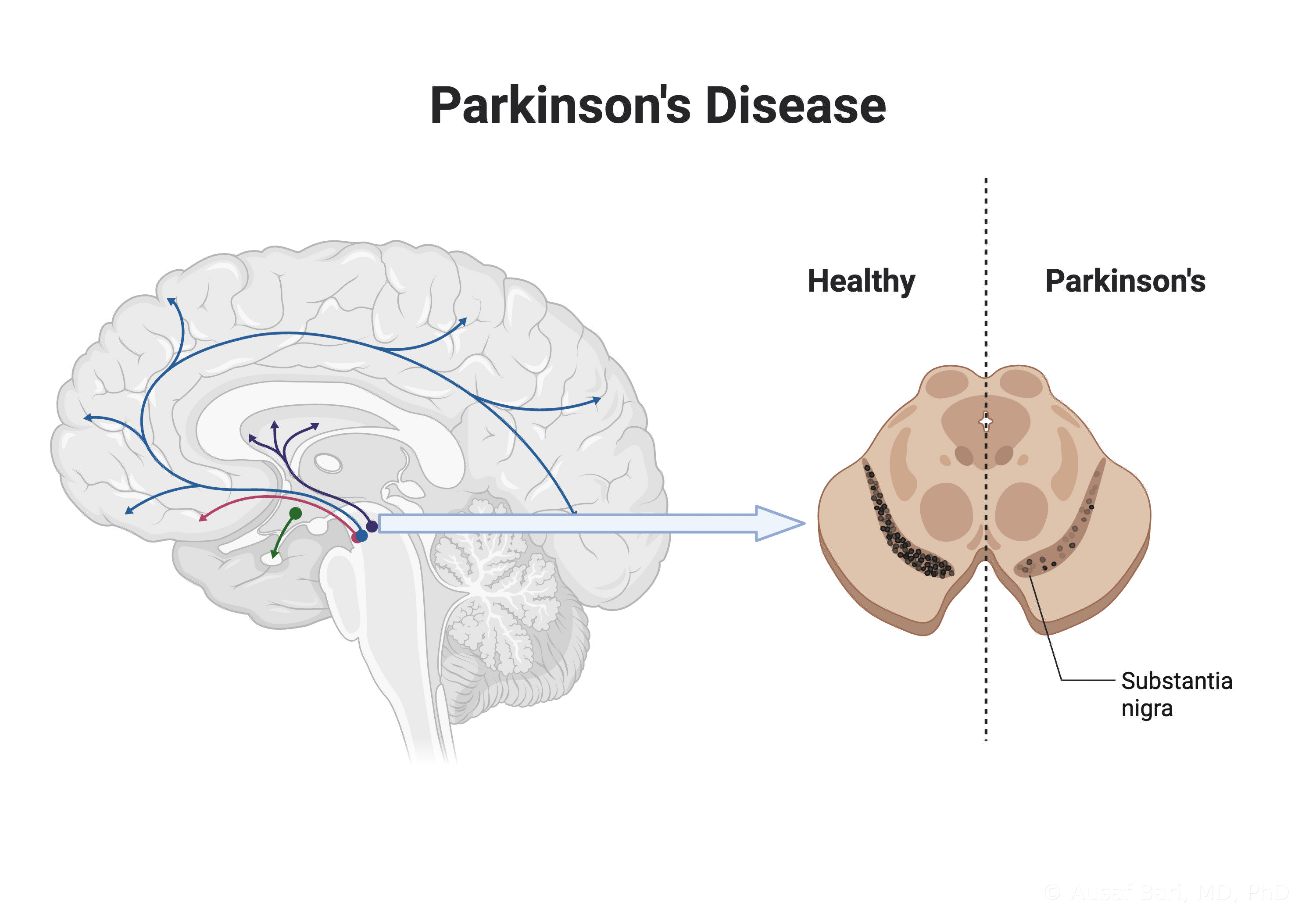
Parkinson’s disease involves the gradual loss of cells in a small midbrain region called the substantia nigra. These cells produce dopamine, a chemical messenger that helps the brain’s movement circuits run smoothly. Medications such as levodopa replace or mimic dopamine, and they are usually very effective early on.
When To Discuss Surgery
Over the years, the benefit from each dose can become shorter and less predictable. Symptoms return between doses, and treatment can bring unwanted involuntary movements called dyskinesias. Consider a consultation when these fluctuations, troublesome tremor, or dyskinesias interfere with everyday activities despite careful adjustment of medication.
Timing matters. Surgery is not a last resort; it is often most useful during the years when medication still works well but no longer works reliably.
How DBS May Help
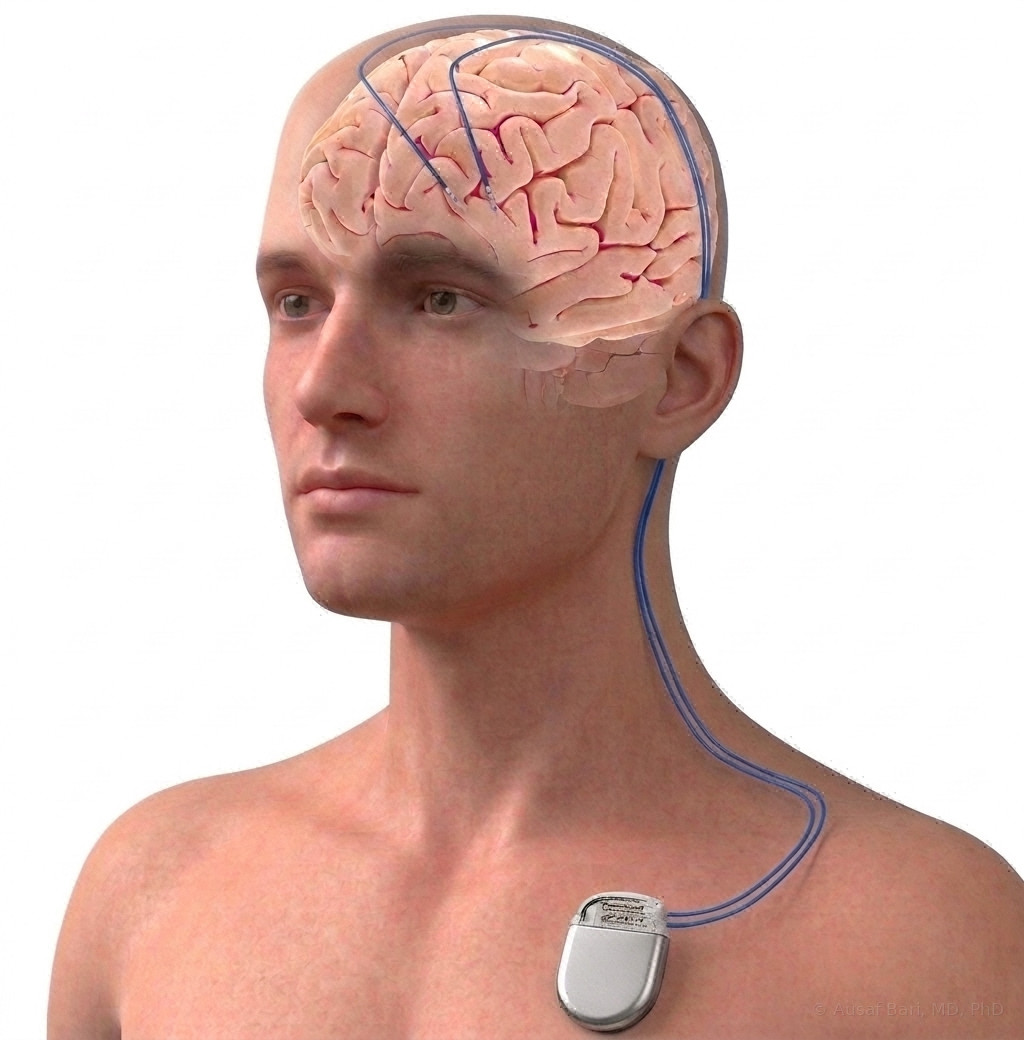
Deep brain stimulation delivers adjustable electrical stimulation to a movement circuit, most often the subthalamic nucleus or the globus pallidus. It can smooth out fluctuations, reduce tremor, stiffness, and dyskinesias, and often allows medication to be reduced. As a rule, the symptoms that improve with your best dose of levodopa are the ones most likely to improve with DBS; tremor is the main exception and can respond even when medication does not.
DBS does not cure Parkinson’s disease and does not reliably help balance, speech, or thinking. A clear conversation about which of your symptoms are likely to respond is the heart of the evaluation.
Focused Ultrasound For Parkinson’s Disease
MRI-guided focused ultrasound is also approved for selected people with Parkinson’s disease, including tremor-dominant disease and, on one side, advanced disease with medication-related complications. It creates a permanent change without an incision but cannot be adjusted afterward. Whether it is a better fit than DBS depends on your symptoms and goals.
How Referrals Work For Movement Disorders
Dr. Bari does not decide on surgery alone, and the path starts with a movement disorders neurologist. Before a surgical consultation, a movement disorders neurologist, either one of Dr. Bari’s UCLA colleagues or a specialist near you, confirms the diagnosis, makes sure first-line medications have been given a fair trial, and, for Parkinson’s disease, confirms that you are on the right doses and that surgery is the appropriate next step. That referral is what starts the surgical evaluation. For Parkinson’s disease that usually includes an assessment of your movement on and off medication, so everyone can see what your best medication response looks like and what surgery could add.
If you do not have a movement disorders neurologist, call and the team will arrange one. If you already have one, ask them to send a referral with their notes, your medication history, and any imaging. Dr. Bari then sees you, reviews everything with the neurologist, and together you choose between focused ultrasound, DBS, and radiosurgery.
What The Evaluation Considers
- Whether the diagnosis is Parkinson’s disease or another form of parkinsonism.
- Your movement and independence when medication is working at its best.
- Medication response, side effects, and personal goals.
- Memory and thinking, mood, and general health.
Questions To Bring
- Which of my symptoms are likely to respond?
- What ongoing medication and programming would I need?